• About Us
  • Contact Us
No Result
View All Result
Friday, April 10, 2026
ISJ
  • Home
  • Editorial
  • Development
  • Press Release
    • General
    • Human Rights
    • Iran and Middle East
    • Nuclear
    • Terrorism
  • Media Coverage
  • Open letters
  • Resources
    • Multimedia
    • Publications
ISJ
No Result
View All Result
Home Media Coverage

Was Soleimani’s killing justified? Yes. A million times yes

30/05/2021
in Media Coverage
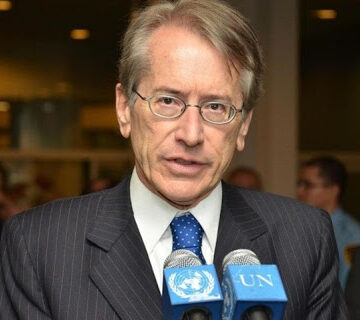
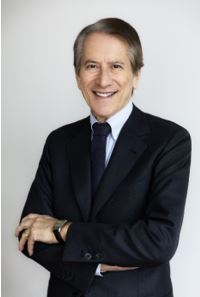
Giulio Terzi

Minister of Foreign Affairs of Italy (2011- 2013), Permanent Representative of Italy to the United Nations in New York (2008- 2009) and Ambassador of Italy to the United States (2009- 2011)

Share on FacebookShare on TwitterShare on RedditShare on Linkedin

Euronews
4 Jan 2020

By Giulio Terzi di Sant’Agata

As we take stock of General Qassem Soleimani’s death, contemplating both its significance in the coming weeks and what it signifies for the future, there are two points to be considered.

Firstly, why did it happen and was it justified? Secondly, what does it mean for geopolitical relations in the Middle East and around the globe?

The first question, to my mind, is the simpler of the two. President Trump’s decision to take out Soleimani may have caught the world by surprise, but it is not without context.

In 2015, the United States withdrew its support for the Joint Comprehensive Plan of Action (JCPOA), or the Iran Nuclear Deal as it became known, believing that its sunset clauses only guaranteed a delay to Iran’s nuclear ambitions while doing little to alter the Islamic Republic’s fundamentally adversarial attitude to both the West and Israel, which it has frequently vowed to destroy.

Since then, America has pursued a policy of “maximum pressure”, seeking to shut down Iran’s access to international finance and force its leaders to return to the negotiating table. In retaliation, Tehran has stepped up its activities across the Middle East, most notably by propping up Bashar al-Assad in Syria as well as rearming Hezbollah in Lebanon and stoking a brutal civil war in Yemen.

Desperation has also emboldened Iran to directly confront both the West and its great regional rival, Saudi Arabia.SPONSORED CONTENTComedy without the clichés: Don Pasquale charms ZurichComedy without the clichés: Don Pasquale charms ZurichAd By euronews

When British marines seized an Iranian oil tanker off Gibraltar in July 2019, believing that its cargo would be sold to the Assad regime, Iran responded by attacking shipping in the Gulf and seizing a British flagged ship, holding its crew to ransom for two months. Tehran’s bullying tactics and repeated assurances that the vessel Grace I was not destined for Syria eventually resulted in the tanker’s release by Gibraltar in August. One month later, Assad had his oil and Tehran its money.

Both September’s attack on Saudi oil fields and the Iranian-directed siege of the US embassy in Baghdad over the past few days relied on the same basic calculation: although its rivals had more money and better military hardware, they were ultimately unwilling to provoke an all-out war with Iran. As such, the Islamic Republic could continue to foment discord so long as it did so through proxies or with sufficient plausible deniability.

On 31 December 2019, when President Trump warned of serious reprisals if US facilities came under attack by Iran or its proxies, the Iranian Supreme Leader Khamenei taunted Trump with a tweet suggesting that the US “can’t do anything” in response to Iranian aggression. Khamenei was wrong. General Soleimani is dead and now Iran must bury the remains of its most vaunted commander.

Was this justified? Yes. A million times yes.

In his decades-long career at the helm of the Quds Force, the unit of Iran’s Revolutionary Guards responsible for directing Iran’s unconventional conflicts abroad (think Syria, Yemen and Iraq over the last two decades), General Soleimani was responsible for countless deaths, including those of Iraqis, Americans, Syrians and Iranians to name a few.

Soleimani posed a direct and ongoing threat to civilians across the Middle East, as well as to American personnel in Iraq and elsewhere. What is more, he perpetrated his crimes in the manner of a common terrorist; that he has died like one is only fitting.

What of this moment’s significance?

Without doubt, the death of General Soleimani is likely to prove much more significant than that of either Osama Bin Laden or Abu Bakr al-Baghdadi.

In both of the latter cases, these were largely symbolic moments in the war on terror. Both Al Qaeda and Islamic State had long since been set up to operate in a decentralised and cellular fashion, a function of the fact that their leaders were in hiding and unable to manage their day-to-day operations, as well as to ward off infiltration.

The case of Soleimani is altogether different. His death is much more than symbolic and will send ripples across the Middle East and beyond, altering the prevailing dynamics to which we have become accustomed.

Firstly, to state the obvious, the Islamic Republic is a very different entity compared to either Al Qaeda and Isis. It has been no less damaging to peace in the Middle East, but as a functioning nation state, the death of its second most powerful leader is much more than symbolic. Iran can and will retaliate. In all likelihood, it will continue to do so through proxies, constantly testing the limits of what it can get away with. But this will be with a new ferocity.

Secondly, Soleimani’s death will shore up domestic support for the Islamic Republic, which in recent months had been wavering. The protests which raged throughout Iran before Christmas will be brushed aside with calls for national unity in the face of foreign aggression.

Thirdly, the European Union, as well as countries such as France and Britain, all of whom have until now sought to keep the JCPOA on life support, will be forced to choose sides. For countries like Britain, who have faced Iranian aggression first-hand, this may no longer seem such a difficult choice.

Finally, President Trump will also have to decide how far he is willing to go in his face-off with the Supreme Leader Khamenei. Iran has been calling America’s bluff for many years. With this blow, the US has stated its willingness to act. Who blinks next is anyone’s guess.

Ambassador Giulio Terzi di Sant’Agata is a former Foreign Minister of Italy, former Italian Ambassador to the United States and former Permanent Representative of Italy to the United Nations.

Source: EuroNews, 4 Jan 2020

ShareTweetShareShare
Previous Post

Why is world ignoring this murderous crackdown on protesters? – Struan Stevenson

Next Post

Alejo Vidal Quadras The Committee President

Related Posts

Media Coverage

Focus Iran’s Future on Democracy, Not Dynasty

12/02/2026
Media Coverage

Appeasement Has Failed: Britain Must Finally Proscribe the IRGC and Close Iran’s Embassy

03/02/2026
Media Coverage

Blood Is the Last Currency of Iran’s Failing Theocracy

21/01/2026
Media Coverage

Iran Does Not Need a Crown — It Needs a Republic

13/01/2026
Media Coverage

Neither Shah Nor Supreme Leader: Can Iran’s Theocracy Survive a Nation in Revolt?

04/01/2026
Media Coverage

Ypres, Human Rights Day, and Iran’s Martyrs: Why Memory Is a Moral Duty

15/12/2025
Next Post
Ireland Should Stop Appeasing to Iran

Alejo Vidal Quadras The Committee President

RECOMMENDED NEWS

Supporting freedom & resistance in Iran for global peace and security

Supporting freedom & resistance in Iran for global peace and security

2 years ago
Ted Cruz (R-TX) US Senator for Texas, Member of Senate Foreign Relations Committee addressed the Free Iran World Summit

Ted Cruz (R-TX) US Senator for Texas, Member of Senate Foreign Relations Committee addressed the Free Iran World Summit

5 years ago
Open Letter of 11 Former Foreign Ministers to EU & US on Iran Crisis

Open Letter of 11 Former Foreign Ministers to EU & US on Iran Crisis

2 years ago
Iranian regime erupts in fury at Slovenian prime minister's speech

Iranian regime erupts in fury at Slovenian prime minister’s speech

5 years ago

FOLLOW US

BROWSE BY CATEGORIES

  • Calls for justice for the victims of Iran’s 1988 massacre
  • Development
  • Editorial
  • Free Iran World Summit 2021
  • Free Iran World Summit 2023
  • General
  • Human Rights
  • In the Media
  • Iran and Middle East
  • Media Coverage
  • Multimedia
  • Open letters
  • Press Release
  • Publications
  • Resources
  • Speeches
  • Support for a Free Iran 2022
  • Terrorism
  • The Committee
  • Uncategorized

BROWSE BY TOPICS

Alejo Vidal Quadras Amnesty International Ashraf-3 Ashraf 3 COVID-19 cyberattacks Ebrahim Raisi EU Policy Fligth 752 FREE IRAN 2022 Free Iran Summit FREE IRAN WORLD SUMMIT 2021 Free Iran World Summit 2023 Giulio Terzi of Sant'Agata Hamid Nouri Human Rights Iran Iran 1988 Massacre Iran diplomat terrorist Iran election Iran Protests Iran Revolution Iran Uprising Iran ‌Nuclear Deal IRGC JCPOA Kazem Rajavi Mek-Iran Mike Pomoeo Nazanin Zaghari-Ratcliffe Pahlavi Paulo Casaca Resistance Struan Stevenson Terrorism Vidal-Quadras War in Afghanistan women's suppression

POPULAR NEWS

  • 3600 lawmakers in 40 countries Support Maryam Rajavi’s Ten-point Plan for a democratic republic in Iran

    3600 lawmakers in 40 countries Support Maryam Rajavi’s Ten-point Plan for a democratic republic in Iran

    0 shares
    Share 0 Tweet 0
  • Alejo Vidal Quadras The Committee President

    0 shares
    Share 0 Tweet 0
  • ALBANIA CONDEMNED FOR BRUTAL RAID ON ASHRAF-3

    0 shares
    Share 0 Tweet 0
  • Giulio Terzi, Honorary Chairman of Committee on the Protection of Human Rights & Justice in Iran

    0 shares
    Share 0 Tweet 0
  • ISJ Report-Iran Agents in Europe

    0 shares
    Share 0 Tweet 0

About Us

ISJ

International Committee In Search of Justice (ISJ) was initially formed in 2008 as an informal group of EU parliamentarians to seek justice for the Iranian democratic opposition. In 2014 it was registered as a non-profit NGO in Brussels expanding its membership beyond elected parliamentarians to former officials and other dignitaries with an interest to promote ​​human rights, freedom, democracy, peace and stability.

Follow us on social media:

Follow Us On Twitter

Recent News

Focus Iran’s Future on Democracy, Not Dynasty

12/02/2026

ISJ Honors the Legacy of Prof. Rita Süssmuth and Her Support for Iranian Democratic Resistance

03/02/2026

Appeasement Has Failed: Britain Must Finally Proscribe the IRGC and Close Iran’s Embassy

03/02/2026

Blood Is the Last Currency of Iran’s Failing Theocracy

21/01/2026

The Committee

Paulo Casaca, founder and executive director of the “South Asia Democratic Forum”
The Committee

Paulo Casaca, founder and executive director of the “South Asia Democratic Forum”

Paulo Casaca, founder and executive director of the “South Asia Democratic Forum”, is also the founder of the international co-operation ...

01/02/2022
Paulo Casaca,  former Member of the European Parliament (1999-2009)
The Committee

Paulo Casaca, former Member of the European Parliament (1999-2009)

Paulo Casaca is a former Portuguese MP and former Member of the European Parliament (1999-2009) where he chaired the delegation ...

16/11/2021
Struan Stevenson Chairman of Committee on the Protection of Political Freedoms in Iran
The Committee

Struan Stevenson Chairman of Committee on the Protection of Political Freedoms in Iran

Struan Stevenson is the Coordinator of the Campaign for Iran Change (CiC) and Chair ISJ Committee on the Protection of ...

01/02/2022
Giulio Terzi, Honorary Chairman of Committee on the Protection of Human Rights & Justice in Iran
The Committee

Giulio Terzi, Honorary Chairman of Committee on the Protection of Human Rights & Justice in Iran

Ambassador Giulio Terzi di Sant’Agata has served in the Italian Foreign Service for forty years until December 2012. He was ...

01/02/2022
Lord Maginnis of Drumglass
The Committee

Lord Maginnis of Drumglass

Lord Maginnis of Drumglass

29/05/2021
Lord Dholakia
The Committee

Lord Dholakia- OBE, Deputy Leader of Liberal Democrats in House of Lords

Lord Dholakia, OBE, Deputy Leader of Liberal Democrats in House of Lords

29/05/2021
Lord Clarke of Hampstead,
The Committee

Lord Clarke of Hampstead, CBE, Former Chairman of UK Labour Party

Lord Clarke of Hampstead, CBE, Former Chairman of UK Labour Party

29/05/2021
Lord Carlile of Berriew
The Committee

Lord Carlile of Berriew, QC​ Co – chairman of British Parliamentary Committee for Iran Freedom, former independent reviewer of UK terrorism legislations

Lord Carlile of Berriew, QC​ Co – chairman of British Parliamentary Committee for Iran Freedom, former independent reviewer of UK terrorism legislations

29/05/2021
Tunne Kelam
The Committee

Tunne Kelam, Former Member of European Parliament

Tunne Kelam Former Member of European Parliament

29/05/2021
Ryszard Czarnecki
The Committee

Ryszard Czarnecki, Former Vice President of European Parliament

Ryszard Czarnecki Former Vice President of European Parliament

29/05/2021
Gérard Deprez,
The Committee

Gérard Deprez, Former MEP, former Chair Friends of a Free Iran intergroup European Parliament

Gérard Deprez, Former MEP, former Chair Friends of a Free Iran intergroup European Parliament

29/05/2021
Antonio Razzi
The Committee

Antonio Razzi, Secretary of Italian Senate Foreign Affairs Committee

Antonio Razzi, Secretary of Italian Senate Foreign Affairs Committee

29/05/2021
Alessandro Pagano
The Committee

Alessandro Pagano, MP President of Committee of Italian Parliamentarians for a Free Iran

Alessandro Pagano, MP President of Committee of Italian Parliamentarians  for a Free Iran

29/05/2021
Senator Lucio Malan, Quaestor of Italian Senate
The Committee

Senator Lucio Malan, Quaestor of Italian Senate

Senator Lucio Malan, Quaestor of Italian Senate

29/05/2021
Colonel Wesley Martin
The Committee

Colonel Wesley Martin, Antiterrorism/Force Protection Officer of all Coalition forces in Iraq (2005-2007)

Colonel Wesley Martin Antiterrorism/Force Protection Officer of all Coalition forces in Iraq (2005-2007)

29/05/2021
Horst Teltschik
The Committee

Horst Teltschik, Chairman of the Munich Security Conference (1999-2008)

Horst Teltschik, Chairman of the Munich Security Conference (1999-2008)

29/05/2021
Raymond Tanter
The Committee

Prof. Raymond Tanter, President of Iran Policy Committee, Washington D.C.

Prof. Raymond Tanter President of Iran Policy Committee, Washington D.C.

29/05/2021
Ingrid-Betancourt
The Committee

Ingrid Betancourt

29/05/2021
General Hugh Shelton
The Committee

Gen. Hugh Shelton, Chairman of US Joint Chiefs of Staff (1997-2001)

Gen. Hugh Shelton, Chairman of US Joint Chiefs of Staff (1997-2001)

29/05/2021
  • Home
  • Media Coverage
  • Press Releases
  • Contact Us
  • About Us

© 2024 - International Committee In Search of Justice (ISJ)

No Result
View All Result
  • Home
  • About Us
  • Editorial
  • Development
  • Press Release
    • General
    • Human Rights
    • Iran and Middle East
    • Nuclear
    • Terrorism
  • Media Coverage
  • Open letters
  • Resources
    • Multimedia
    • Publications

© 2024 - International Committee In Search of Justice (ISJ)