
• About Us
  • Contact Us
No Result
View All Result
Thursday, April 9, 2026
ISJ
  • Home
  • Editorial
  • Development
  • Press Release
    • General
    • Human Rights
    • Iran and Middle East
    • Nuclear
    • Terrorism
  • Media Coverage
  • Open letters
  • Resources
    • Multimedia
    • Publications
ISJ
No Result
View All Result
Home Speeches Calls for justice for the victims of Iran’s 1988 massacre

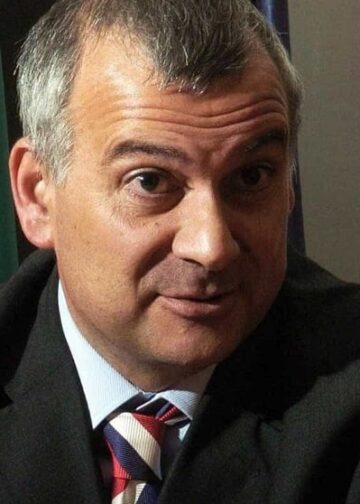
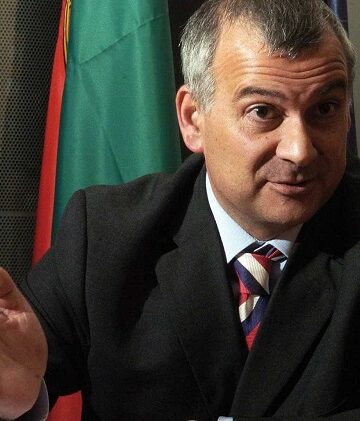
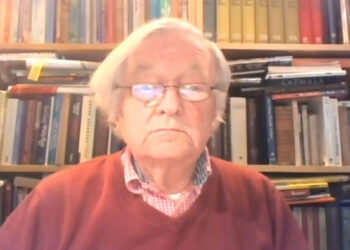
Guy Verhofstadt, Prime Minister of Belgium (1999 to 2008), addressed the August 27th conference

30/08/2021
in Calls for justice for the victims of Iran’s 1988 massacre
Guy-Verhofstadt-Iran-1988-Massacre

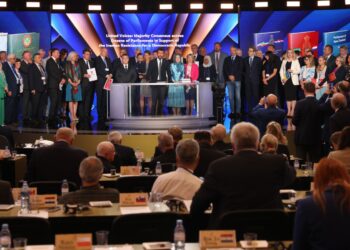
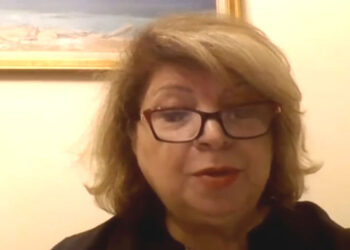
Guy Verhofstadt addressing the the August 27th conference: Iran 1988 Massacre and Genocide

Share on FacebookShare on TwitterShare on RedditShare on Linkedin

Guy Verhofstadt, Prime Minister of Belgium (1999 to 2008), addressed the August 27th international conference “Iran: 1988 Massacre and Genocide – No to impunity, yes to accountability”

Thank you. And I want to thank you for this opportunity to speak at this occasion and I especially want to thank the speakers in the first round and a specialist that we had on human rights in the first round, because I think that they have given a useful and also a valuable insight on this massacre of 1988. Especially I think that Professor Robertson and Mr. David have illustrated that this is not only a crime against humanity, but that all the conditions are there to qualify the massacre of 1988 as a genocide. And I think that could be a very important conclusion of this conference. The fact that every one of these distinguished professors and specialists on human rights are clear and saying that this is genocide.

Also, I want to send my deepest appreciation to the testimony we heard today from surviving families of those who have been murdered, because we are still, I am still shocked by what happened in 1988 in the Islamic Republic of Iran. And the reason why is because these people whom we are talking about, mainly young people, had no chance to hide themselves, had no chance to flee from their torture. All these people were already locked up. All these people were already deprived from their freedom. All these people were already jailed and convicted by so-called revolutionary court. And it’s because of this fatwa of Khomeini that these people, already in jail, were tortured, interrogated in inquisitional sessions by the so-called death commissions, and almost hanged immediately.

What is so special to the massacre of 1988, I think is that it was targeting a whole generation of young people and young women and I think there is truth in that in was already planned years in advance, what happened in 1988. And what happened in 1988 is the consequence of the Iranian regime itself. The fact that the Iranian regime always tries to silence one or the other way, in the most brutal way, those who are asking for improvement of human rights, those who are asking for freedom, or even those who are asking for the sustainable solution for water. Also, that is deemed by the regime as an attack on the regime.

So, I think that the 1988 massacre was planned. It was rigorously prepared. It was gruesomely executed, and yes at breakneck speeds with a clear target group in mind and therefore I think Mr. Robinson and Professor David are right to qualify it as genocide. I want also to pay tribute to the victims by a short moment to imagine together here in the conference, the situation that if these murders had never taken place. Imagine that instead of this mass slaughter, all these people, many of them were teenagers, many of them were in their early twenties, had regained their freedom. That these people were not slaughtered, and these people, talented and driven men and women, found the opportunity to rebuild their country, raise their children, start a business, cast a ballot in free and fair elections. Then I think that without that Massacre of 1988, there would be a totally different Iran today. And so, this Massacre of 1988 has a deep significance I think for Iran. And it has been done already, but I want to recall it. The anniversary of the 1988 state massacre is not to mourn those who are slaughtered, it is simply also to remind what price has been paid for freedom and for the fight for freedom. And we have to recognize, and it has already been said, but I want to recall it, that after the massacre, the International Community has, let’s say it again, failed to act over this crime against humanity. We all know, it has been said, but I repeat it, the events of December of 1988 were never officially investigated by the UN, and as we know the instigators and the perpetrators were never indicted and far worse, we have to say the perpetrators continue to enjoy impunity and today the regime is run by the killers of that time, occupying senior government positions, including the new president, Raisi,  who we all known his track record on human rights violations and who plays as we know a leading role in this massacre.

I think that the only benefit of, I cannot say election because it was not a fair election, but the promotion, I will say, of Raisi to the presidency, is that maybe for the first time, it has drawn the world’s attention to that massacre again of 1988 and to the many long-established patterns of human rights violations and murders in Iran. And I think that it would be good also that we express our gratefulness to all the journalists, activists, and social media, and human rights defenders, that in the last month, since the promotion of Raisi, have reminded the world of this man’s litany of abuses and crimes that run like a thread and tear at his dubious character. We should also, and I want to go a little bit into detail in this, be grateful for the case of Hamid Noury, who is standing trial in Stockholm for war crimes and murder in connection with the hardest prison massacre. As we know it is the first time that a member of the so-called death commission is facing prosecution and hopefully, this trial will not only reveal details and names of what happened, but also be an example for other countries to a put people before a court. Because let’s not forget, that in many countries in the west and in many European countries, in the existing law in the existing legislation, there is already the possibility to put people that are suspected to be perpetrator of crimes against humanity before their courts. Before their own course as it is the case now in Sweden. So what Sweden is doing, what the court in Sweden is doing is an extremely important example that needs to be followed up at the same attitude in many other Western and European countries. Because in their legislation today, there is already the possibility to put perpetrators of crimes against humanity before their courts, even when the facts have not been done on the soil of the European or western state. But nevertheless, I agree with the general appeal today in this conference, that we need a profound official international investigation. Because we cannot tolerate the fact that impunity continues, and we must not delay it any longer. It’s high time, 33 years after the tragic events, to fully uncover the scope of the massacre and it’s our moral duty to do so. Because if we fail to do so, we remain not only blind to the terrible atrocities committed by this regime, but I think it is even more important, we remain blind to the endless grief of the affected families, and the survivors. For them this continues, this tragedy, and this tragedy can only end when those who were responsible are sanctioned, are convicted. And not launching an official inquiry on an international level implies also that we open the door of impunity to every other regime where torture and murder are common practice, and failing to carry out an official investigation under the auspices of the UN would result in fact in inviting all malice regimes, where human rights are trampled, to continue their practices, to continue their violence against their own people.

So, we need urgently this official inquiry and for what was possible after the genocide in Rwanda, and after the civil war in the former Yugoslavian Republic, must also be possible for the massacre in Iran. It was possible in Rwanda. It was possible for the former Yugoslavia Republic. An official inquiry under UN and followed by the installation of an international criminal tribunal.

I think that Europe has a special role to play in this. We always talk about human rights. We have to live up to our promises. And we, as Europe, have to be a catalyst for speeding up the process for an official inquiry in this. And therefore, I will take an initiative and I want to announce here in this conference to send a message, letter, officially to Borrell, the high representatives of the Union for foreign affairs and security policy, requesting him to submit, in the name of Europe, an official request to the UN for the establishment of a commission of inquiry into the massacre and to seek support for that request from other democratic governments like US, Canada, Australia, and Japan, to take up this course. I think that is what we need to do on the European level. Not only words, but an official request by the European Union to the UN, for the establishment of that.

So, I conclude, three decades after the 1988 prison massacre in Iran, it is absolutely needed to do that, and we need to do that for the sake of Iran, for the sake of democracy and freedom in Iran, but especially for their families. So that they finally know where their relatives are buried, that the victim receive their rightful place, and that impunity for crimes against humanity will finally be brought to an end, and that will be the best way after 30 years, for them to conclude their long period of mourning.
Tags: Iran 1988 Massacre
ShareTweetShareShare
Previous Post

Kumi Naidoo, Secretary General of Amnesty International (2018-2020) addressed the August 27th conference

Next Post

Franco Frattini, Foreign Minister of Italy (2002–2004 & 2008–2011) addressed the August 27th conference

Related Posts

Theo Van Boven-Iran- 1988 Massacre
Calls for justice for the victims of Iran’s 1988 massacre

Theo Van Boven, former Director of the UN Division of Human Rights, adressed the August 27th conference

31/08/2021
Gulnara Shahinian - Iran 1988 Massacre
Calls for justice for the victims of Iran’s 1988 massacre

Gulnara Shahinian, former UN Special Rapporteur, adressed the August 27th conference

31/08/2021
Dominique Attias - Iran 1988 Massacre
Calls for justice for the victims of Iran’s 1988 massacre

Dominique Attias, Chair of the European Bars Federation, addressed the August 27th conference

31/08/2021
John Baird - Iran 1988 Massacre
Calls for justice for the victims of Iran’s 1988 massacre

John Baird, Canadian Foreign Minister (2011-2015) addressed the August 27th conference

31/08/2021
Audronius Ažubalis - Iran 1988 Massacre
Calls for justice for the victims of Iran’s 1988 massacre

Audronius Ažubalis, Minister of Foreign Affairs of Lithuania (2010 – 2012) addressed the August 27th conference

30/08/2021
Franco Frattini Iran 1988 Massacre
Calls for justice for the victims of Iran’s 1988 massacre

Franco Frattini, Foreign Minister of Italy (2002–2004 & 2008–2011) addressed the August 27th conference

31/08/2021
Next Post
Franco Frattini Iran 1988 Massacre

Franco Frattini, Foreign Minister of Italy (2002–2004 & 2008–2011) addressed the August 27th conference

RECOMMENDED NEWS

Ingrid-Betancourt

Ingrid Betancourt

6 years ago
Franco Frattini, Minister of Foreign Affairs of Italy, European Commissioner for Justice, Freedom and Security addressed the Free Iran World Summit

Franco Frattini, Minister of Foreign Affairs of Italy, European Commissioner for Justice, Freedom and Security addressed the Free Iran World Summit

5 years ago
Dutch woman arrested over shooting of Spanish former politician

Dutch woman arrested over shooting of Spanish former politician

2 years ago
Prof. Dr. Tritan Shehu, Albanian MP, Minister of Foreign Affairs (1996-1997) addressed the Free Iran World Summit

Prof. Dr. Tritan Shehu, Albanian MP, Minister of Foreign Affairs (1996-1997) addressed the Free Iran World Summit

5 years ago

FOLLOW US

BROWSE BY CATEGORIES

  • Calls for justice for the victims of Iran’s 1988 massacre
  • Development
  • Editorial
  • Free Iran World Summit 2021
  • Free Iran World Summit 2023
  • General
  • Human Rights
  • In the Media
  • Iran and Middle East
  • Media Coverage
  • Multimedia
  • Open letters
  • Press Release
  • Publications
  • Resources
  • Speeches
  • Support for a Free Iran 2022
  • Terrorism
  • The Committee
  • Uncategorized

BROWSE BY TOPICS

Alejo Vidal Quadras Amnesty International Ashraf-3 Ashraf 3 COVID-19 cyberattacks Ebrahim Raisi EU Policy Fligth 752 FREE IRAN 2022 Free Iran Summit FREE IRAN WORLD SUMMIT 2021 Free Iran World Summit 2023 Giulio Terzi of Sant'Agata Hamid Nouri Human Rights Iran Iran 1988 Massacre Iran diplomat terrorist Iran election Iran Protests Iran Revolution Iran Uprising Iran ‌Nuclear Deal IRGC JCPOA Kazem Rajavi Mek-Iran Mike Pomoeo Nazanin Zaghari-Ratcliffe Pahlavi Paulo Casaca Resistance Struan Stevenson Terrorism Vidal-Quadras War in Afghanistan women's suppression

POPULAR NEWS

  • 3600 lawmakers in 40 countries Support Maryam Rajavi’s Ten-point Plan for a democratic republic in Iran

    3600 lawmakers in 40 countries Support Maryam Rajavi’s Ten-point Plan for a democratic republic in Iran

    0 shares
    Share 0 Tweet 0
  • Alejo Vidal Quadras The Committee President

    0 shares
    Share 0 Tweet 0
  • ALBANIA CONDEMNED FOR BRUTAL RAID ON ASHRAF-3

    0 shares
    Share 0 Tweet 0
  • Giulio Terzi, Honorary Chairman of Committee on the Protection of Human Rights & Justice in Iran

    0 shares
    Share 0 Tweet 0
  • ISJ Report-Iran Agents in Europe

    0 shares
    Share 0 Tweet 0

About Us

ISJ

International Committee In Search of Justice (ISJ) was initially formed in 2008 as an informal group of EU parliamentarians to seek justice for the Iranian democratic opposition. In 2014 it was registered as a non-profit NGO in Brussels expanding its membership beyond elected parliamentarians to former officials and other dignitaries with an interest to promote ​​human rights, freedom, democracy, peace and stability.

Follow us on social media:

Follow Us On Twitter

Recent News

Focus Iran’s Future on Democracy, Not Dynasty

12/02/2026

ISJ Honors the Legacy of Prof. Rita Süssmuth and Her Support for Iranian Democratic Resistance

03/02/2026

Appeasement Has Failed: Britain Must Finally Proscribe the IRGC and Close Iran’s Embassy

03/02/2026

Blood Is the Last Currency of Iran’s Failing Theocracy

21/01/2026

The Committee

Paulo Casaca, founder and executive director of the “South Asia Democratic Forum”
The Committee

Paulo Casaca, founder and executive director of the “South Asia Democratic Forum”

Paulo Casaca, founder and executive director of the “South Asia Democratic Forum”, is also the founder of the international co-operation ...

01/02/2022
Paulo Casaca,  former Member of the European Parliament (1999-2009)
The Committee

Paulo Casaca, former Member of the European Parliament (1999-2009)

Paulo Casaca is a former Portuguese MP and former Member of the European Parliament (1999-2009) where he chaired the delegation ...

16/11/2021
Struan Stevenson Chairman of Committee on the Protection of Political Freedoms in Iran
The Committee

Struan Stevenson Chairman of Committee on the Protection of Political Freedoms in Iran

Struan Stevenson is the Coordinator of the Campaign for Iran Change (CiC) and Chair ISJ Committee on the Protection of ...

01/02/2022
Giulio Terzi, Honorary Chairman of Committee on the Protection of Human Rights & Justice in Iran
The Committee

Giulio Terzi, Honorary Chairman of Committee on the Protection of Human Rights & Justice in Iran

Ambassador Giulio Terzi di Sant’Agata has served in the Italian Foreign Service for forty years until December 2012. He was ...

01/02/2022
Lord Maginnis of Drumglass
The Committee

Lord Maginnis of Drumglass

Lord Maginnis of Drumglass

29/05/2021
Lord Dholakia
The Committee

Lord Dholakia- OBE, Deputy Leader of Liberal Democrats in House of Lords

Lord Dholakia, OBE, Deputy Leader of Liberal Democrats in House of Lords

29/05/2021
Lord Clarke of Hampstead,
The Committee

Lord Clarke of Hampstead, CBE, Former Chairman of UK Labour Party

Lord Clarke of Hampstead, CBE, Former Chairman of UK Labour Party

29/05/2021
Lord Carlile of Berriew
The Committee

Lord Carlile of Berriew, QC​ Co – chairman of British Parliamentary Committee for Iran Freedom, former independent reviewer of UK terrorism legislations

Lord Carlile of Berriew, QC​ Co – chairman of British Parliamentary Committee for Iran Freedom, former independent reviewer of UK terrorism legislations

29/05/2021
Tunne Kelam
The Committee

Tunne Kelam, Former Member of European Parliament

Tunne Kelam Former Member of European Parliament

29/05/2021
Ryszard Czarnecki
The Committee

Ryszard Czarnecki, Former Vice President of European Parliament

Ryszard Czarnecki Former Vice President of European Parliament

29/05/2021
Gérard Deprez,
The Committee

Gérard Deprez, Former MEP, former Chair Friends of a Free Iran intergroup European Parliament

Gérard Deprez, Former MEP, former Chair Friends of a Free Iran intergroup European Parliament

29/05/2021
Antonio Razzi
The Committee

Antonio Razzi, Secretary of Italian Senate Foreign Affairs Committee

Antonio Razzi, Secretary of Italian Senate Foreign Affairs Committee

29/05/2021
Alessandro Pagano
The Committee

Alessandro Pagano, MP President of Committee of Italian Parliamentarians for a Free Iran

Alessandro Pagano, MP President of Committee of Italian Parliamentarians  for a Free Iran

29/05/2021
Senator Lucio Malan, Quaestor of Italian Senate
The Committee

Senator Lucio Malan, Quaestor of Italian Senate

Senator Lucio Malan, Quaestor of Italian Senate

29/05/2021
Colonel Wesley Martin
The Committee

Colonel Wesley Martin, Antiterrorism/Force Protection Officer of all Coalition forces in Iraq (2005-2007)

Colonel Wesley Martin Antiterrorism/Force Protection Officer of all Coalition forces in Iraq (2005-2007)

29/05/2021
Horst Teltschik
The Committee

Horst Teltschik, Chairman of the Munich Security Conference (1999-2008)

Horst Teltschik, Chairman of the Munich Security Conference (1999-2008)

29/05/2021
Raymond Tanter
The Committee

Prof. Raymond Tanter, President of Iran Policy Committee, Washington D.C.

Prof. Raymond Tanter President of Iran Policy Committee, Washington D.C.

29/05/2021
Ingrid-Betancourt
The Committee

Ingrid Betancourt

29/05/2021
General Hugh Shelton
The Committee

Gen. Hugh Shelton, Chairman of US Joint Chiefs of Staff (1997-2001)

Gen. Hugh Shelton, Chairman of US Joint Chiefs of Staff (1997-2001)

29/05/2021
  • Home
  • Media Coverage
  • Press Releases
  • Contact Us
  • About Us

© 2024 - International Committee In Search of Justice (ISJ)

No Result
View All Result
  • Home
  • About Us
  • Editorial
  • Development
  • Press Release
    • General
    • Human Rights
    • Iran and Middle East
    • Nuclear
    • Terrorism
  • Media Coverage
  • Open letters
  • Resources
    • Multimedia
    • Publications

© 2024 - International Committee In Search of Justice (ISJ)