
• About Us
  • Contact Us
No Result
View All Result
Friday, April 10, 2026
ISJ
  • Home
  • Editorial
  • Development
  • Press Release
    • General
    • Human Rights
    • Iran and Middle East
    • Nuclear
    • Terrorism
  • Media Coverage
  • Open letters
  • Resources
    • Multimedia
    • Publications
ISJ
No Result
View All Result
Home Media Coverage

Iran seeks to add Beirut to list of capitals it controls

20/10/2021
in Media Coverage
Iran seeks to add Beirut to list of capitals it controls
Share on FacebookShare on TwitterShare on RedditShare on Linkedin

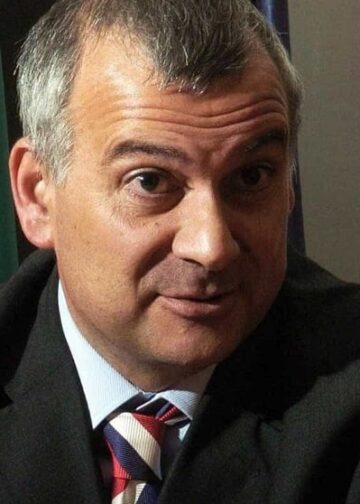
Oct. 18 (UPI) — By Struan Stevenson

Ayatollah Ali Khamenei, the supreme leader of the Islamic Republic of Iran, has made no secret of his wish to dominate the Middle East.

His policy of aggressive expansionism has seen him spend over $100 billion backing Bashar al-Assad’s bloody civil war in Syria, approaching its 11th year. He has funded, supplied and controlled the brutal Shi’ia militias in neighboring Iraq, fashioning them into the ruthless Hashd al-Shabi Popular Mobilization Forces (PMF), whose pro-Iranian political wing has just won seats in the recent parliamentary elections.

He has funded and supplied arms and missiles to the Houthi rebels in Yemen since the civil war began in that country in 2014. He has nurtured and financed the terrorist Hezbollah in Lebanon, deploying them as a proxy army in Syria and elsewhere in the region.

It is little wonder that Khamenei and his acolytes now claim to control three Arab capitals, embracing Damascus, Baghdad and Sanaa and they would dearly love to add Beirut to that list.

The massive explosion that destroyed the port of Beirut in August 2020, leaving 218 dead and thousands injured, sent shockwaves across the Middle East. It soon emerged that the Lebanese authorities had known that over 2,700 tons of highly combustible ammonium nitrate had been stored in a giant warehouse at the port for years.

But typically, responsibility for the ticking time bomb had been passed down the line. The military, politicians, civil servants and judges all refused to accept responsibility, until finally the prime minister ordered the warehouse door to be sealed shut as a safety precaution. Unfortunately, no one told the welders who were sent to seal the door what was inside.

In the 15 months that have passed since that fateful day, Lebanon has become a virtual basket case. The Lebanese economy and currency have collapsed. The country now has the third highest rate of inflation in the world, worse even than Zimbabwe and Venezuela. Electricity blackouts, previously unheard of in this oil-rich nation, are now a common feature, driving business and industry out of the country. The existence of large fields of unexploited hydrocarbon reserves in the eastern Mediterranean have long been known, but political paralysis in Beirut has prevented their exploitation.

Sensing that America has lost interest in the Middle East following its calamitous withdrawal from Afghanistan and pledge to withdraw all combat troops from Iraq, the Iranians have leapt upon the opportunity to consolidate their grip on Lebanon. The mullahs’ regime has begun sending convoys of tankers filled with diesel to Beirut and they have offered to build two new power plants. Any threat to their hegemony will be ruthlessly put down by their Hezbollah allies.

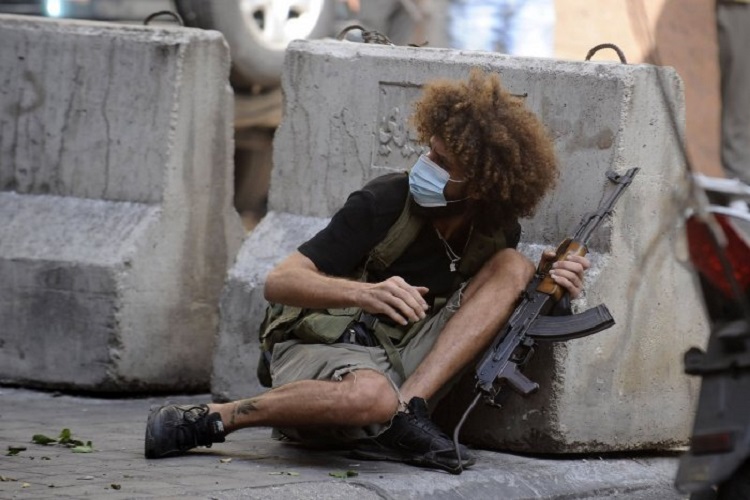
Indeed, shooting and mortar fire reminiscent of the 1975 civil war erupted in Beirut last week, when protesters demanding the removal of a judge investigating last year’s explosion were attacked. The demonstration had been organized by Hezbollah and they immediately accused the Saudi-backed Christian Lebanese Forces party of mounting the assault, in which six Shi’ites were killed. The eruption of a new civil conflict involving Lebanon’s three diverse communities, Shi’ia, Sunni and Christian, would play directly into the hands of the Iranian regime.

When civil war erupted in Iraq, it was largely instigated by Tehran. The Iranian regime had encouraged their puppet Iraqi Prime Minister Nouri al-Maliki, to crack down on the minority Sunni population, igniting a backlash that was quickly exploited by Islamic State. In 2014, ISIS surged into Iraq, quickly capturing around 40% of its territory. The Iranian regime then seized their opportunity.

Claiming to help their Iraqi neighbors and the West in the fight against ISIS, the mullahs sent the terrorist chief of their extra-territorial Quds Force — Gen. Qassem Soleimani, to lead the fight against the insurgents. Commanding the Iraqi Shi’ite militias, Soleimani oversaw the genocidal massacre of tens of thousands of Iraqi Sunnis in the ancient cities of Fallujah, Ramadi and Mosul, leaving smoking ruins in his wake.

Soleimani and the Iraqi leader of Hashd al-Shabi, Abu Mehdi Mohandes, were killed by an American drone strike ordered by U.S. President Donald Trump, at Baghdad Airport on Jan. 3, 2020. This caused a huge setback for the Iranian regime. Combined with their own collapsing economy under tough American sanctions and the coronavirus pandemic, which has killed 460,000 people, there is rising unrest in Iran.

In a bid to control the 80 million Iranian population and prevent another nationwide uprising similar to what occurred in November 2019, Khamenei shoe-horned his henchman, Ebrahim Raisi, into the presidency, following sham elections in June.

Raisi is known as the Butcher of Tehran, for his alleged involvement in the massacre of more than 30,000 political prisoners, mostly supporters of the opposition People’s Mojahedin of Iran (PMOI/MEK) in 1988. In his previous post as chief of the judiciary, Raisi is accused of directing the killing of 1,500 young protesters during the 2019 nationwide uprising. Thousands more were injured, and many were arrested, tortured and executed. Khamenei clearly believes that a ruthless, hard-line president will enable Iran to re-establish its supremacy in the Middle East and flex its muscles worldwide.

Adding Beirut to Iran’s list of supplicant Middle East capitals, is clearly the next objective for Khamenei and his new fanatical president. Last week’s armed clashes in the Lebanese capital, in which two Hezbollah militants were among those killed, will lead to renewed support for the terrorist Shi’ia militant group from Tehran.

The mullahs will urge Hezbollah to retaliate. They know that the group’s advanced training regimen for other pro-Iranian Shi’ia militias across the Middle East is of key importance to their own survival. Hezbollah’s expansive illicit financing actions, combined with its procurement, intelligence, cyber and disinformation activities, have turned it into a key regional player acting at Iran’s behest. For the Iranian regime, using Hezbollah to turn Lebanon into a client-state is a primary goal.

Struan Stevenson is coordinator of the Campaign for Iran Change. He was a member of the European Parliament representing Scotland (1999-2014), president of the Parliament’s Delegation for Relations with Iraq (2009-14) and chairman of the Friends of a Free Iran Intergroup (2004-14). He serves as chairman of the In Search of Justice committee on the protection of political freedoms in Iran. He is an international lecturer on the Middle East and is also president of the European Iraqi Freedom Association.

ShareTweetShareShare
Previous Post

SIR DAVID AMESS MP

Next Post

Iranian regime’s credibility is shrinking

Related Posts

Media Coverage

Focus Iran’s Future on Democracy, Not Dynasty

12/02/2026
Media Coverage

Appeasement Has Failed: Britain Must Finally Proscribe the IRGC and Close Iran’s Embassy

03/02/2026
Media Coverage

Blood Is the Last Currency of Iran’s Failing Theocracy

21/01/2026
Media Coverage

Iran Does Not Need a Crown — It Needs a Republic

13/01/2026
Media Coverage

Neither Shah Nor Supreme Leader: Can Iran’s Theocracy Survive a Nation in Revolt?

04/01/2026
Media Coverage

Ypres, Human Rights Day, and Iran’s Martyrs: Why Memory Is a Moral Duty

15/12/2025
Next Post
Iranian regime's credibility is shrinking

Iranian regime's credibility is shrinking

RECOMMENDED NEWS

Recurrence of uprisings in Iran highlights missing factor in Western policy

Recurrence of uprisings in Iran highlights missing factor in Western policy

4 years ago

ISJ Press Release – Is Spiegelgate the Western press’ worst scandal?

7 years ago
About the 30th Anniversary of the AIMA Bombing

About the 30th Anniversary of the AIMA Bombing

2 years ago
109 Former World Leaders Support Regime Change in Iran

109 Former World Leaders Support Regime Change in Iran

3 years ago

FOLLOW US

BROWSE BY CATEGORIES

  • Calls for justice for the victims of Iran’s 1988 massacre
  • Development
  • Editorial
  • Free Iran World Summit 2021
  • Free Iran World Summit 2023
  • General
  • Human Rights
  • In the Media
  • Iran and Middle East
  • Media Coverage
  • Multimedia
  • Open letters
  • Press Release
  • Publications
  • Resources
  • Speeches
  • Support for a Free Iran 2022
  • Terrorism
  • The Committee
  • Uncategorized

BROWSE BY TOPICS

Alejo Vidal Quadras Amnesty International Ashraf-3 Ashraf 3 COVID-19 cyberattacks Ebrahim Raisi EU Policy Fligth 752 FREE IRAN 2022 Free Iran Summit FREE IRAN WORLD SUMMIT 2021 Free Iran World Summit 2023 Giulio Terzi of Sant'Agata Hamid Nouri Human Rights Iran Iran 1988 Massacre Iran diplomat terrorist Iran election Iran Protests Iran Revolution Iran Uprising Iran ‌Nuclear Deal IRGC JCPOA Kazem Rajavi Mek-Iran Mike Pomoeo Nazanin Zaghari-Ratcliffe Pahlavi Paulo Casaca Resistance Struan Stevenson Terrorism Vidal-Quadras War in Afghanistan women's suppression

POPULAR NEWS

  • 3600 lawmakers in 40 countries Support Maryam Rajavi’s Ten-point Plan for a democratic republic in Iran

    3600 lawmakers in 40 countries Support Maryam Rajavi’s Ten-point Plan for a democratic republic in Iran

    0 shares
    Share 0 Tweet 0
  • Alejo Vidal Quadras The Committee President

    0 shares
    Share 0 Tweet 0
  • ALBANIA CONDEMNED FOR BRUTAL RAID ON ASHRAF-3

    0 shares
    Share 0 Tweet 0
  • Giulio Terzi, Honorary Chairman of Committee on the Protection of Human Rights & Justice in Iran

    0 shares
    Share 0 Tweet 0
  • ISJ Report-Iran Agents in Europe

    0 shares
    Share 0 Tweet 0

About Us

ISJ

International Committee In Search of Justice (ISJ) was initially formed in 2008 as an informal group of EU parliamentarians to seek justice for the Iranian democratic opposition. In 2014 it was registered as a non-profit NGO in Brussels expanding its membership beyond elected parliamentarians to former officials and other dignitaries with an interest to promote ​​human rights, freedom, democracy, peace and stability.

Follow us on social media:

Follow Us On Twitter

Recent News

Focus Iran’s Future on Democracy, Not Dynasty

12/02/2026

ISJ Honors the Legacy of Prof. Rita Süssmuth and Her Support for Iranian Democratic Resistance

03/02/2026

Appeasement Has Failed: Britain Must Finally Proscribe the IRGC and Close Iran’s Embassy

03/02/2026

Blood Is the Last Currency of Iran’s Failing Theocracy

21/01/2026

The Committee

Paulo Casaca, founder and executive director of the “South Asia Democratic Forum”
The Committee

Paulo Casaca, founder and executive director of the “South Asia Democratic Forum”

Paulo Casaca, founder and executive director of the “South Asia Democratic Forum”, is also the founder of the international co-operation ...

01/02/2022
Paulo Casaca,  former Member of the European Parliament (1999-2009)
The Committee

Paulo Casaca, former Member of the European Parliament (1999-2009)

Paulo Casaca is a former Portuguese MP and former Member of the European Parliament (1999-2009) where he chaired the delegation ...

16/11/2021
Struan Stevenson Chairman of Committee on the Protection of Political Freedoms in Iran
The Committee

Struan Stevenson Chairman of Committee on the Protection of Political Freedoms in Iran

Struan Stevenson is the Coordinator of the Campaign for Iran Change (CiC) and Chair ISJ Committee on the Protection of ...

01/02/2022
Giulio Terzi, Honorary Chairman of Committee on the Protection of Human Rights & Justice in Iran
The Committee

Giulio Terzi, Honorary Chairman of Committee on the Protection of Human Rights & Justice in Iran

Ambassador Giulio Terzi di Sant’Agata has served in the Italian Foreign Service for forty years until December 2012. He was ...

01/02/2022
Lord Maginnis of Drumglass
The Committee

Lord Maginnis of Drumglass

Lord Maginnis of Drumglass

29/05/2021
Lord Dholakia
The Committee

Lord Dholakia- OBE, Deputy Leader of Liberal Democrats in House of Lords

Lord Dholakia, OBE, Deputy Leader of Liberal Democrats in House of Lords

29/05/2021
Lord Clarke of Hampstead,
The Committee

Lord Clarke of Hampstead, CBE, Former Chairman of UK Labour Party

Lord Clarke of Hampstead, CBE, Former Chairman of UK Labour Party

29/05/2021
Lord Carlile of Berriew
The Committee

Lord Carlile of Berriew, QC​ Co – chairman of British Parliamentary Committee for Iran Freedom, former independent reviewer of UK terrorism legislations

Lord Carlile of Berriew, QC​ Co – chairman of British Parliamentary Committee for Iran Freedom, former independent reviewer of UK terrorism legislations

29/05/2021
Tunne Kelam
The Committee

Tunne Kelam, Former Member of European Parliament

Tunne Kelam Former Member of European Parliament

29/05/2021
Ryszard Czarnecki
The Committee

Ryszard Czarnecki, Former Vice President of European Parliament

Ryszard Czarnecki Former Vice President of European Parliament

29/05/2021
Gérard Deprez,
The Committee

Gérard Deprez, Former MEP, former Chair Friends of a Free Iran intergroup European Parliament

Gérard Deprez, Former MEP, former Chair Friends of a Free Iran intergroup European Parliament

29/05/2021
Antonio Razzi
The Committee

Antonio Razzi, Secretary of Italian Senate Foreign Affairs Committee

Antonio Razzi, Secretary of Italian Senate Foreign Affairs Committee

29/05/2021
Alessandro Pagano
The Committee

Alessandro Pagano, MP President of Committee of Italian Parliamentarians for a Free Iran

Alessandro Pagano, MP President of Committee of Italian Parliamentarians  for a Free Iran

29/05/2021
Senator Lucio Malan, Quaestor of Italian Senate
The Committee

Senator Lucio Malan, Quaestor of Italian Senate

Senator Lucio Malan, Quaestor of Italian Senate

29/05/2021
Colonel Wesley Martin
The Committee

Colonel Wesley Martin, Antiterrorism/Force Protection Officer of all Coalition forces in Iraq (2005-2007)

Colonel Wesley Martin Antiterrorism/Force Protection Officer of all Coalition forces in Iraq (2005-2007)

29/05/2021
Horst Teltschik
The Committee

Horst Teltschik, Chairman of the Munich Security Conference (1999-2008)

Horst Teltschik, Chairman of the Munich Security Conference (1999-2008)

29/05/2021
Raymond Tanter
The Committee

Prof. Raymond Tanter, President of Iran Policy Committee, Washington D.C.

Prof. Raymond Tanter President of Iran Policy Committee, Washington D.C.

29/05/2021
Ingrid-Betancourt
The Committee

Ingrid Betancourt

29/05/2021
General Hugh Shelton
The Committee

Gen. Hugh Shelton, Chairman of US Joint Chiefs of Staff (1997-2001)

Gen. Hugh Shelton, Chairman of US Joint Chiefs of Staff (1997-2001)

29/05/2021
  • Home
  • Media Coverage
  • Press Releases
  • Contact Us
  • About Us

© 2024 - International Committee In Search of Justice (ISJ)

No Result
View All Result
  • Home
  • About Us
  • Editorial
  • Development
  • Press Release
    • General
    • Human Rights
    • Iran and Middle East
    • Nuclear
    • Terrorism
  • Media Coverage
  • Open letters
  • Resources
    • Multimedia
    • Publications

© 2024 - International Committee In Search of Justice (ISJ)