
• About Us
  • Contact Us
No Result
View All Result
Thursday, April 9, 2026
ISJ
  • Home
  • Editorial
  • Development
  • Press Release
    • General
    • Human Rights
    • Iran and Middle East
    • Nuclear
    • Terrorism
  • Media Coverage
  • Open letters
  • Resources
    • Multimedia
    • Publications
ISJ
No Result
View All Result
Home Media Coverage

Dramatic progress of Iranian uprising should prompt a revision of Western policy

31/10/2022
in Media Coverage
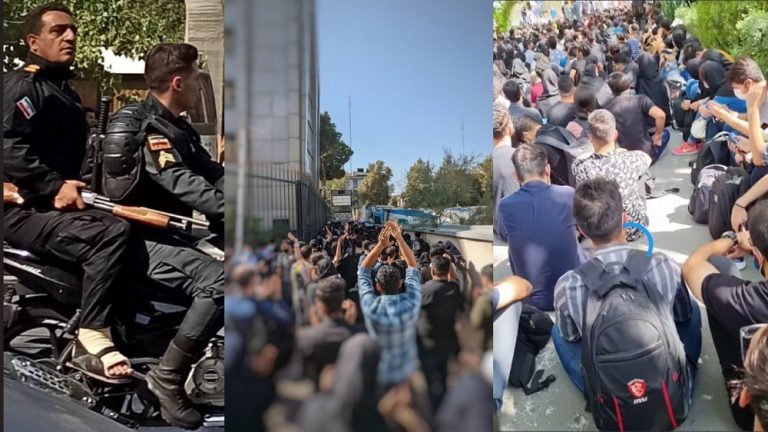
Iran-universities-support-sharif
Share on FacebookShare on TwitterShare on RedditShare on Linkedin

Arab News – by Alejo Vidal Quadras – October 29, 2022

The past month’s developments in Iran have taken much of the world by surprise. In so doing, they have also forced Western policymakers to wrestle with new questions about their prior justifications for a weak approach to dealing with the clerical regime in Tehran.

For the better part of four decades, that approach has been attributable to a widely-shared assumption that the regime’s hold on power was secure and that no viable alternative was waiting in the wings. The scale and boldness of the current, ongoing uprising challenges that assumption, especially when viewed in the context of a series of other recent uprisings that all demonstrated a strong element of organization and unified messaging.

Government-in-waiting

The first in that series, which began in the final days of 2017, prompted a rare admission from the regime’s supreme leader, Ali Khamenei. Following unrest that had persisted for weeks in well over 100 locations, with protesters chanting anti-government slogans such as “death to the dictator,” the regime’s ruling cleric delivered a speech in which he attributed the rapid spread of unrest and provocative messaging to the leading pro-democracy opposition group, the People’s Mojahedin Organization of Iran.

That group has long advocated for a new revolution to overthrow the ruling mullahs, while insisting that the current system is more vulnerable than it might appear on the surface.

As the main constituent of the National Council of Resistance of Iran, the PMOI has also played a leading role in establishing a sort of government-in-waiting. The coalition has chosen Maryam Rajavi to serve as transitional president in the aftermath of a long-sought revolution.

The current unrest gives the distinct impression that this revolution is closer to hand than ever. In fact, this was acknowledged recently by 170 members of the European Parliament, from various political groups, when they signed a statement that observed: “The prospect of regime change in Iran has never been so easy and accessible. It is the time now to recognize the Iranian people’s legitimate right to defend themselves.”

Right to self-defense

It should go without saying that recognition of this right to self-defense presupposes recognition of the organized opposition that is most capable of mounting an effective defense against regime authorities. This in turn demands that the EU and other world powers make concerted efforts to understand what the results might be of support for such an opposition. In other words, it is time for Western governments to think about what Iran might look like in absence of the ayatollahs.

I have made my own efforts to understand this while following issues related to Iran throughout my political career, which has lasted every bit as long as the regime in Tehran itself. While serving for 15 years as vice-president of the European Parliament, I came to recognize that member states, and the legislative body as a whole, generally struggled to formulate policy on Iran. Later, I found an opportunity to approach the relevant issues from a different angle when I chaired the Committee In Search of Justice.

Consequently, I have become intimately familiar with the Iranian regime’s penchant for human rights abuses and I have also developed a deep appreciation for the Iranian people’s growing resilience in the face of them.

Therefore, the public backlash against the death of Mahsa Amini last month at the hands of the “morality police” came as little surprise to me. Neither was I particularly surprised when those protests transcended their initial emphasis on the regime’s enforcement of forced veiling laws and ultimately grew into an anti-government uprising encompassing 190 cities in all 31 Iranian provinces, as well as 45 major universities.

More than 400 people killed

Since the first days of the uprising, the participants have been chanting, “Death to Khamenei.” This happens to be the very slogan that defined the, admittedly PMOI-led, uprising in January 2018, as well as at least half a dozen other protests in between.

In retaliation, security forces have fired tear gas and live ammunition into crowds, killing more than 400 people so far. More than 20,000 people have been arrested, with many of them sent to notoriously abusive political wards run by the Islamic Revolutionary Guard Corps.

However, this crackdown has failed to silence the dissent or prevent the spread of the uprising, during which teenage girls assumed an especially prominent role this month, before oil workers began to mount labor strikes in solidarity, thereby exerting economic pressure on an already vulnerable regime.

Insofar as Western policymakers have typically failed to recognize that vulnerability, they most likely did not anticipate that the uprising would persist for more than a month or demonstrate the continuity and geographic reach that we have seen.

But the uprising has achieved all of this and more through the support of the PMOI’s network of “resistance units,” the escalating influence of which over mass protests has received insufficient recognition in recent years.

Revise foreign policy

Now that that this influence is unmistakable, there are serious doubts about whether the clerical regime can survive this latest challenge. Even if it does, it is difficult to imagine that the regime can return to the status quo or avoid a resurgence in popular unrest after the next high-profile instance of abuse or corruption involving regime authorities.

This new reality makes it newly imperative for the Western world, and especially Europe, to revise its foreign policies and root out the faulty assumption that the mullahs’ hold on power is secure.

The aforementioned statement from 170 members of the European Parliament sets out what such a change of policy might look like. It recommends that the EU and its member states insist that all relations with the Iranian regime are contingent upon an end to the suppression of protests and the release of all persons who have been detained for taking part in the uprising.

It also urges Western governments and private-sector partners to formulate a solid plan to help the Iranian people maintain their organizational efforts by providing them with access to the internet, free of the regime’s filters and blocks.

These and other measures should be implemented on the basis of international recognition of the rights of the Iranian people to fight back against an oppressive, theocratic and, ultimately, illegitimate system, which is more vulnerable to public unrest than Western lawmakers were prepared to admit prior to this latest uprising.

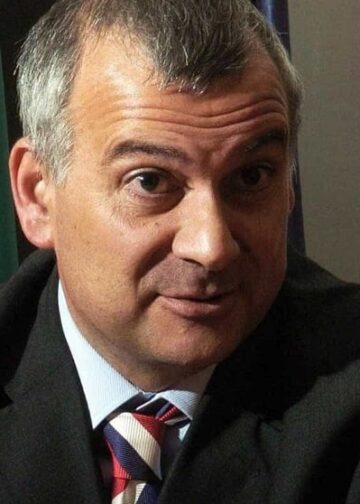
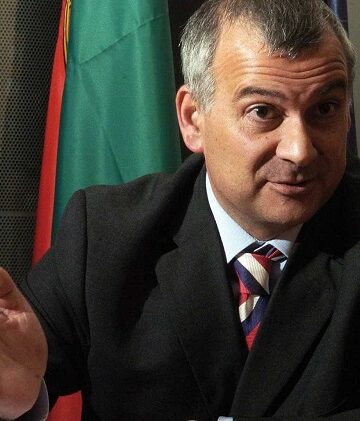
• Alejo Vidal-Quadras, a Spanish professor of atomic and nuclear physics, was vice-president of the European Parliament from 1999 to 2014. He is currently president of the Brussels-based International Committee in Search of Justice

Tags: Iran Protests
ShareTweetShareShare
Previous Post

Former Western Ministers Support Iran Uprising

Next Post

‘I prepare to die every time I leave the house’ – the teenage girls leading Iran’s revolution

Related Posts

Media Coverage

Focus Iran’s Future on Democracy, Not Dynasty

12/02/2026
Media Coverage

Appeasement Has Failed: Britain Must Finally Proscribe the IRGC and Close Iran’s Embassy

03/02/2026
Media Coverage

Blood Is the Last Currency of Iran’s Failing Theocracy

21/01/2026
Media Coverage

Iran Does Not Need a Crown — It Needs a Republic

13/01/2026
Media Coverage

Neither Shah Nor Supreme Leader: Can Iran’s Theocracy Survive a Nation in Revolt?

04/01/2026
Media Coverage

Ypres, Human Rights Day, and Iran’s Martyrs: Why Memory Is a Moral Duty

15/12/2025
Next Post
freedom-for-Iran

‘I prepare to die every time I leave the house’ – the teenage girls leading Iran’s revolution

RECOMMENDED NEWS

Iran’s Morality Police in New Crackdown on Women

Iran’s Morality Police in New Crackdown on Women

3 years ago

Departure of the final group of Camp Liberty residents from Iraq

10 years ago
-Iranian President Ebrahim Raisi met Russian President Vladimir Putin and Turkish President Recep Tayyip Erdogan in Tehran last month (Picture Sergei SavostyanovSputnikAFP via Getty Images)

Iran’s bloodsoaked president, Ebrahim Raisi, must be banned from United Nations’ General Assembly

4 years ago
Struan Stevenson Chairman of Committee on the Protection of Political Freedoms in Iran

Struan Stevenson Chairman of Committee on the Protection of Political Freedoms in Iran

6 years ago

FOLLOW US

BROWSE BY CATEGORIES

  • Calls for justice for the victims of Iran’s 1988 massacre
  • Development
  • Editorial
  • Free Iran World Summit 2021
  • Free Iran World Summit 2023
  • General
  • Human Rights
  • In the Media
  • Iran and Middle East
  • Media Coverage
  • Multimedia
  • Open letters
  • Press Release
  • Publications
  • Resources
  • Speeches
  • Support for a Free Iran 2022
  • Terrorism
  • The Committee
  • Uncategorized

BROWSE BY TOPICS

Alejo Vidal Quadras Amnesty International Ashraf-3 Ashraf 3 COVID-19 cyberattacks Ebrahim Raisi EU Policy Fligth 752 FREE IRAN 2022 Free Iran Summit FREE IRAN WORLD SUMMIT 2021 Free Iran World Summit 2023 Giulio Terzi of Sant'Agata Hamid Nouri Human Rights Iran Iran 1988 Massacre Iran diplomat terrorist Iran election Iran Protests Iran Revolution Iran Uprising Iran ‌Nuclear Deal IRGC JCPOA Kazem Rajavi Mek-Iran Mike Pomoeo Nazanin Zaghari-Ratcliffe Pahlavi Paulo Casaca Resistance Struan Stevenson Terrorism Vidal-Quadras War in Afghanistan women's suppression

POPULAR NEWS

  • 3600 lawmakers in 40 countries Support Maryam Rajavi’s Ten-point Plan for a democratic republic in Iran

    3600 lawmakers in 40 countries Support Maryam Rajavi’s Ten-point Plan for a democratic republic in Iran

    0 shares
    Share 0 Tweet 0
  • Alejo Vidal Quadras The Committee President

    0 shares
    Share 0 Tweet 0
  • ALBANIA CONDEMNED FOR BRUTAL RAID ON ASHRAF-3

    0 shares
    Share 0 Tweet 0
  • Giulio Terzi, Honorary Chairman of Committee on the Protection of Human Rights & Justice in Iran

    0 shares
    Share 0 Tweet 0
  • ISJ Report-Iran Agents in Europe

    0 shares
    Share 0 Tweet 0

About Us

ISJ

International Committee In Search of Justice (ISJ) was initially formed in 2008 as an informal group of EU parliamentarians to seek justice for the Iranian democratic opposition. In 2014 it was registered as a non-profit NGO in Brussels expanding its membership beyond elected parliamentarians to former officials and other dignitaries with an interest to promote ​​human rights, freedom, democracy, peace and stability.
Follow us on social media:

Follow Us On Twitter

Recent News

Focus Iran’s Future on Democracy, Not Dynasty

12/02/2026

ISJ Honors the Legacy of Prof. Rita Süssmuth and Her Support for Iranian Democratic Resistance

03/02/2026

Appeasement Has Failed: Britain Must Finally Proscribe the IRGC and Close Iran’s Embassy

03/02/2026

Blood Is the Last Currency of Iran’s Failing Theocracy

21/01/2026

The Committee

Paulo Casaca, founder and executive director of the “South Asia Democratic Forum”
The Committee

Paulo Casaca, founder and executive director of the “South Asia Democratic Forum”

Paulo Casaca, founder and executive director of the “South Asia Democratic Forum”, is also the founder of the international co-operation ...

01/02/2022
Paulo Casaca,  former Member of the European Parliament (1999-2009)
The Committee

Paulo Casaca, former Member of the European Parliament (1999-2009)

Paulo Casaca is a former Portuguese MP and former Member of the European Parliament (1999-2009) where he chaired the delegation ...

16/11/2021
Struan Stevenson Chairman of Committee on the Protection of Political Freedoms in Iran
The Committee

Struan Stevenson Chairman of Committee on the Protection of Political Freedoms in Iran

Struan Stevenson is the Coordinator of the Campaign for Iran Change (CiC) and Chair ISJ Committee on the Protection of ...

01/02/2022
Giulio Terzi, Honorary Chairman of Committee on the Protection of Human Rights & Justice in Iran
The Committee

Giulio Terzi, Honorary Chairman of Committee on the Protection of Human Rights & Justice in Iran

Ambassador Giulio Terzi di Sant’Agata has served in the Italian Foreign Service for forty years until December 2012. He was ...

01/02/2022
Lord Maginnis of Drumglass
The Committee

Lord Maginnis of Drumglass

Lord Maginnis of Drumglass

29/05/2021
Lord Dholakia
The Committee

Lord Dholakia- OBE, Deputy Leader of Liberal Democrats in House of Lords

Lord Dholakia, OBE, Deputy Leader of Liberal Democrats in House of Lords

29/05/2021
Lord Clarke of Hampstead,
The Committee

Lord Clarke of Hampstead, CBE, Former Chairman of UK Labour Party

Lord Clarke of Hampstead, CBE, Former Chairman of UK Labour Party

29/05/2021
Lord Carlile of Berriew
The Committee

Lord Carlile of Berriew, QC​ Co – chairman of British Parliamentary Committee for Iran Freedom, former independent reviewer of UK terrorism legislations

Lord Carlile of Berriew, QC​ Co – chairman of British Parliamentary Committee for Iran Freedom, former independent reviewer of UK terrorism legislations

29/05/2021
Tunne Kelam
The Committee

Tunne Kelam, Former Member of European Parliament

Tunne Kelam Former Member of European Parliament

29/05/2021
Ryszard Czarnecki
The Committee

Ryszard Czarnecki, Former Vice President of European Parliament

Ryszard Czarnecki Former Vice President of European Parliament

29/05/2021
Gérard Deprez,
The Committee

Gérard Deprez, Former MEP, former Chair Friends of a Free Iran intergroup European Parliament

Gérard Deprez, Former MEP, former Chair Friends of a Free Iran intergroup European Parliament

29/05/2021
Antonio Razzi
The Committee

Antonio Razzi, Secretary of Italian Senate Foreign Affairs Committee

Antonio Razzi, Secretary of Italian Senate Foreign Affairs Committee

29/05/2021
Alessandro Pagano
The Committee

Alessandro Pagano, MP President of Committee of Italian Parliamentarians for a Free Iran

Alessandro Pagano, MP President of Committee of Italian Parliamentarians  for a Free Iran

29/05/2021
Senator Lucio Malan, Quaestor of Italian Senate
The Committee

Senator Lucio Malan, Quaestor of Italian Senate

Senator Lucio Malan, Quaestor of Italian Senate

29/05/2021
Colonel Wesley Martin
The Committee

Colonel Wesley Martin, Antiterrorism/Force Protection Officer of all Coalition forces in Iraq (2005-2007)

Colonel Wesley Martin Antiterrorism/Force Protection Officer of all Coalition forces in Iraq (2005-2007)

29/05/2021
Horst Teltschik
The Committee

Horst Teltschik, Chairman of the Munich Security Conference (1999-2008)

Horst Teltschik, Chairman of the Munich Security Conference (1999-2008)

29/05/2021
Raymond Tanter
The Committee

Prof. Raymond Tanter, President of Iran Policy Committee, Washington D.C.

Prof. Raymond Tanter President of Iran Policy Committee, Washington D.C.

29/05/2021
Ingrid-Betancourt
The Committee

Ingrid Betancourt

29/05/2021
General Hugh Shelton
The Committee

Gen. Hugh Shelton, Chairman of US Joint Chiefs of Staff (1997-2001)

Gen. Hugh Shelton, Chairman of US Joint Chiefs of Staff (1997-2001)

29/05/2021
  • Home
  • Media Coverage
  • Press Releases
  • Contact Us
  • About Us

© 2024 - International Committee In Search of Justice (ISJ)

No Result
View All Result
  • Home
  • About Us
  • Editorial
  • Development
  • Press Release
    • General
    • Human Rights
    • Iran and Middle East
    • Nuclear
    • Terrorism
  • Media Coverage
  • Open letters
  • Resources
    • Multimedia
    • Publications

© 2024 - International Committee In Search of Justice (ISJ)