
• About Us
  • Contact Us
No Result
View All Result
Friday, April 10, 2026
ISJ
  • Home
  • Editorial
  • Development
  • Press Release
    • General
    • Human Rights
    • Iran and Middle East
    • Nuclear
    • Terrorism
  • Media Coverage
  • Open letters
  • Resources
    • Multimedia
    • Publications
ISJ
No Result
View All Result
Home Media Coverage

In Iran, climate change is becoming a matter of life and death

09/08/2023
in Media Coverage
Share on FacebookShare on TwitterShare on RedditShare on Linkedin

The Scotsman – By Struan Stevenson – 8th Aug 2023

Prior to the 1979 revolution, Iran’s population, numbering 34 million people at that time, relied on a stable water supply, sourced from millennia-old underground canals and aquifers. The Islamic revolution, hijacked by the mullahs, changed all that. The theocratic regime handed control of the nationalised water industry and over 70 per cent of all other business, industrial and service sectors to the Islamic Revolutionary Guards Corps (IRGC).

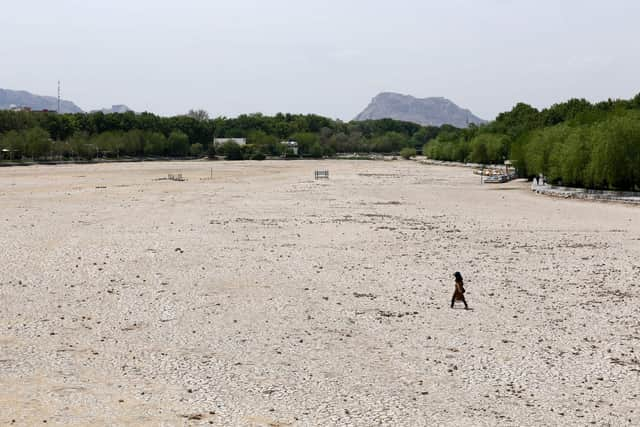
Iran now faces an ecological disaster. As the world experiences what is shaping up to be the hottest summer on record in 2023, warnings about escalating global warming have become even more pressing, but appear to be ignored by Tehran.

The mullahs’ maladministration over four decades has left Iran struggling with deforestation, desertification, water scarcity and countless other examples of environmental degradation. Climate change is exacerbating these environmental issues and turning them into a matter of life and death for the Iranian population, now 85 million strong.

Deprived people living in southern, central and eastern Iran have witnessed the relentless destruction of their water infrastructure by the regime’s institutions, primarily the IRGC. The situation has become so bad that, in Sistan and Baluchistan province, water stress is reaching catastrophic levels and people are being forced to collect rainwater from ditches and crocodile-infested lakes.

Water stress is measured by the available water per cubic meter per person annually. If a country has more than 1,700 cubic meters per person per year, it is considered safe. Below 1,700 cubic meters represents water stress and below 1,000 cubic meters is a water crisis. Iran has been fluctuating between water stress and water crisis since 2022. Predictions are that water availability in Iran may fall below 500 cubic meters by 2050, creating a devastating situation.

Iran’s farmers account for more than 90 per cent of water usage and have been repeatedly encouraged to accelerate crop and stock production to feed a population starved by government ineptitude, mismanagement, and tough international sanctions. Faced with dwindling water supplies, they have been forced to dig deeper wells into depleting groundwater resources to irrigate their crops and water their livestock. It is reckoned the number of wells has multiplied more than 13 times since the 1979 revolution, with most of them illegal and draining far more water than can be sustainably maintained.

In response, combining rank incompetence, venal corruption, and a total disregard for environmental concerns, the IRGC set about a decades-long programme of widespread hydropower dam building, with a series of huge and dishonestly lucrative infrastructure projects, that blocked and diverted rivers and drained lakes and aquifers. As the population of Iran expanded exponentially and climate change saw summer temperatures often soaring to 50 degrees Celsius (122F), the water crisis grew.

Deprived people living in southern, central and eastern Iran have witnessed the relentless destruction of their water infrastructure by the regime’s institutions, primarily the IRGC. The situation has become so bad that, in Sistan and Baluchistan province, water stress is reaching catastrophic levels and people are being forced to collect rainwater from ditches and crocodile-infested lakes.

Water stress is measured by the available water per cubic meter per person annually. If a country has more than 1,700 cubic meters per person per year, it is considered safe. Below 1,700 cubic meters represents water stress and below 1,000 cubic meters is a water crisis. Iran has been fluctuating between water stress and water crisis since 2022. Predictions are that water availability in Iran may fall below 500 cubic meters by 2050, creating a devastating situation.

Iran’s farmers account for more than 90 per cent of water usage and have been repeatedly encouraged to accelerate crop and stock production to feed a population starved by government ineptitude, mismanagement, and tough international sanctions. Faced with dwindling water supplies, they have been forced to dig deeper wells into depleting groundwater resources to irrigate their crops and water their livestock. It is reckoned the number of wells has multiplied more than 13 times since the 1979 revolution, with most of them illegal and draining far more water than can be sustainably maintained.

In response, combining rank incompetence, venal corruption, and a total disregard for environmental concerns, the IRGC set about a decades-long programme of widespread hydropower dam building, with a series of huge and dishonestly lucrative infrastructure projects, that blocked and diverted rivers and drained lakes and aquifers. As the population of Iran expanded exponentially and climate change saw summer temperatures often soaring to 50 degrees Celsius (122F), the water crisis grew.

But the crisis of water scarcity has long passed Khuzestan and has now reached the capital, Tehran, where thousands have taken to the streets in recent weeks to protest about water shortages. The prospect of the capital’s rebellious nine million-strong population rising up in anger terrifies the clerical regime more than anything else. But the mullahs’ only response to the growing crisis has been to threaten further violence.

It is this sort of prevailing paranoia in Iran that has hounded out those who could have helped the situation and forced a brain drain that has seen most of Iran’s best environmental scientists flee the country. As Iran creeps steadily closer towards ecological meltdown, environmental concerns have figured prominently in protests, particularly in regions populated by ethnic minorities like the Azeris and Iranian Arabs.

The mullahs have reacted with typical viciousness, shooting dead unarmed protesters and arresting hundreds of others. But as water and food shortages grow, the Iranian population is becoming increasingly aware of the fact that the government is incapable of delivering basic public goods and services. The tipping point has been reached. Without adequate supplies of food and water, more than 85 million enraged Iranians will quickly lose their fear of batons and bullets.

The only answer to the environmental crisis in Iran, as well as the answer to the economic crisis, the answer to the social crisis and the answer to the security crisis across the Middle East and worldwide is the downfall of the mullahs’ totalitarian regime.

Struan Stevenson, a former member of the European Parliament, is the coordinator of the Campaign for Iran Change and chair of the In Search of Justice committee on the protection of political freedoms in Iran. His latest book is entitled Dictatorship and Revolution. Iran – A Contemporary History.


ShareTweetShareShare
Previous Post

A Diplomatic Row Between Italy and Iran in the Hot Summer

Next Post

Paris Conference Calls to Hold Tehran Accountable for Killing of Democracy Activists

Related Posts

Media Coverage

Focus Iran’s Future on Democracy, Not Dynasty

12/02/2026
Media Coverage

Appeasement Has Failed: Britain Must Finally Proscribe the IRGC and Close Iran’s Embassy

03/02/2026
Media Coverage

Blood Is the Last Currency of Iran’s Failing Theocracy

21/01/2026
Media Coverage

Iran Does Not Need a Crown — It Needs a Republic

13/01/2026
Media Coverage

Neither Shah Nor Supreme Leader: Can Iran’s Theocracy Survive a Nation in Revolt?

04/01/2026
Media Coverage

Ypres, Human Rights Day, and Iran’s Martyrs: Why Memory Is a Moral Duty

15/12/2025
Next Post
Call to Hold Tehran Accountable for Killing

Paris Conference Calls to Hold Tehran Accountable for Killing of Democracy Activists

RECOMMENDED NEWS

Excerpt of Speeches by the Keynote Speaker, Mrs. Maryam Rajavi at 3-Day 'Free Iran' World Summit

Excerpts of the Keynote Speaker at the 3-Day ‘Free Iran’ World Summit

5 years ago
Letter to UN Security Council Members on Iraq / Camp Liberty

Letter to UN Security Council Members on Iraq / Camp Liberty

10 years ago
Congressman Brad Sherman, (D-CA), senior member of the House Foreign Affairs Committee

Congressman Brad Sherman, (D-CA), senior member of the House Foreign Affairs Committee addressed the Free Iran World Summit

5 years ago

Letter to United Nations Security Council

11 years ago

FOLLOW US

BROWSE BY CATEGORIES

  • Calls for justice for the victims of Iran’s 1988 massacre
  • Development
  • Editorial
  • Free Iran World Summit 2021
  • Free Iran World Summit 2023
  • General
  • Human Rights
  • In the Media
  • Iran and Middle East
  • Media Coverage
  • Multimedia
  • Open letters
  • Press Release
  • Publications
  • Resources
  • Speeches
  • Support for a Free Iran 2022
  • Terrorism
  • The Committee
  • Uncategorized

BROWSE BY TOPICS

Alejo Vidal Quadras Amnesty International Ashraf-3 Ashraf 3 COVID-19 cyberattacks Ebrahim Raisi EU Policy Fligth 752 FREE IRAN 2022 Free Iran Summit FREE IRAN WORLD SUMMIT 2021 Free Iran World Summit 2023 Giulio Terzi of Sant'Agata Hamid Nouri Human Rights Iran Iran 1988 Massacre Iran diplomat terrorist Iran election Iran Protests Iran Revolution Iran Uprising Iran ‌Nuclear Deal IRGC JCPOA Kazem Rajavi Mek-Iran Mike Pomoeo Nazanin Zaghari-Ratcliffe Pahlavi Paulo Casaca Resistance Struan Stevenson Terrorism Vidal-Quadras War in Afghanistan women's suppression

POPULAR NEWS

  • 3600 lawmakers in 40 countries Support Maryam Rajavi’s Ten-point Plan for a democratic republic in Iran

    3600 lawmakers in 40 countries Support Maryam Rajavi’s Ten-point Plan for a democratic republic in Iran

    0 shares
    Share 0 Tweet 0
  • Alejo Vidal Quadras The Committee President

    0 shares
    Share 0 Tweet 0
  • ALBANIA CONDEMNED FOR BRUTAL RAID ON ASHRAF-3

    0 shares
    Share 0 Tweet 0
  • Giulio Terzi, Honorary Chairman of Committee on the Protection of Human Rights & Justice in Iran

    0 shares
    Share 0 Tweet 0
  • ISJ Report-Iran Agents in Europe

    0 shares
    Share 0 Tweet 0

About Us

ISJ

International Committee In Search of Justice (ISJ) was initially formed in 2008 as an informal group of EU parliamentarians to seek justice for the Iranian democratic opposition. In 2014 it was registered as a non-profit NGO in Brussels expanding its membership beyond elected parliamentarians to former officials and other dignitaries with an interest to promote ​​human rights, freedom, democracy, peace and stability.

Follow us on social media:

Follow Us On Twitter

Recent News

Focus Iran’s Future on Democracy, Not Dynasty

12/02/2026

ISJ Honors the Legacy of Prof. Rita Süssmuth and Her Support for Iranian Democratic Resistance

03/02/2026

Appeasement Has Failed: Britain Must Finally Proscribe the IRGC and Close Iran’s Embassy

03/02/2026

Blood Is the Last Currency of Iran’s Failing Theocracy

21/01/2026

The Committee

Paulo Casaca, founder and executive director of the “South Asia Democratic Forum”
The Committee

Paulo Casaca, founder and executive director of the “South Asia Democratic Forum”

Paulo Casaca, founder and executive director of the “South Asia Democratic Forum”, is also the founder of the international co-operation ...

01/02/2022
Paulo Casaca,  former Member of the European Parliament (1999-2009)
The Committee

Paulo Casaca, former Member of the European Parliament (1999-2009)

Paulo Casaca is a former Portuguese MP and former Member of the European Parliament (1999-2009) where he chaired the delegation ...

16/11/2021
Struan Stevenson Chairman of Committee on the Protection of Political Freedoms in Iran
The Committee

Struan Stevenson Chairman of Committee on the Protection of Political Freedoms in Iran

Struan Stevenson is the Coordinator of the Campaign for Iran Change (CiC) and Chair ISJ Committee on the Protection of ...

01/02/2022
Giulio Terzi, Honorary Chairman of Committee on the Protection of Human Rights & Justice in Iran
The Committee

Giulio Terzi, Honorary Chairman of Committee on the Protection of Human Rights & Justice in Iran

Ambassador Giulio Terzi di Sant’Agata has served in the Italian Foreign Service for forty years until December 2012. He was ...

01/02/2022
Lord Maginnis of Drumglass
The Committee

Lord Maginnis of Drumglass

Lord Maginnis of Drumglass

29/05/2021
Lord Dholakia
The Committee

Lord Dholakia- OBE, Deputy Leader of Liberal Democrats in House of Lords

Lord Dholakia, OBE, Deputy Leader of Liberal Democrats in House of Lords

29/05/2021
Lord Clarke of Hampstead,
The Committee

Lord Clarke of Hampstead, CBE, Former Chairman of UK Labour Party

Lord Clarke of Hampstead, CBE, Former Chairman of UK Labour Party

29/05/2021
Lord Carlile of Berriew
The Committee

Lord Carlile of Berriew, QC​ Co – chairman of British Parliamentary Committee for Iran Freedom, former independent reviewer of UK terrorism legislations

Lord Carlile of Berriew, QC​ Co – chairman of British Parliamentary Committee for Iran Freedom, former independent reviewer of UK terrorism legislations

29/05/2021
Tunne Kelam
The Committee

Tunne Kelam, Former Member of European Parliament

Tunne Kelam Former Member of European Parliament

29/05/2021
Ryszard Czarnecki
The Committee

Ryszard Czarnecki, Former Vice President of European Parliament

Ryszard Czarnecki Former Vice President of European Parliament

29/05/2021
Gérard Deprez,
The Committee

Gérard Deprez, Former MEP, former Chair Friends of a Free Iran intergroup European Parliament

Gérard Deprez, Former MEP, former Chair Friends of a Free Iran intergroup European Parliament

29/05/2021
Antonio Razzi
The Committee

Antonio Razzi, Secretary of Italian Senate Foreign Affairs Committee

Antonio Razzi, Secretary of Italian Senate Foreign Affairs Committee

29/05/2021
Alessandro Pagano
The Committee

Alessandro Pagano, MP President of Committee of Italian Parliamentarians for a Free Iran

Alessandro Pagano, MP President of Committee of Italian Parliamentarians  for a Free Iran

29/05/2021
Senator Lucio Malan, Quaestor of Italian Senate
The Committee

Senator Lucio Malan, Quaestor of Italian Senate

Senator Lucio Malan, Quaestor of Italian Senate

29/05/2021
Colonel Wesley Martin
The Committee

Colonel Wesley Martin, Antiterrorism/Force Protection Officer of all Coalition forces in Iraq (2005-2007)

Colonel Wesley Martin Antiterrorism/Force Protection Officer of all Coalition forces in Iraq (2005-2007)

29/05/2021
Horst Teltschik
The Committee

Horst Teltschik, Chairman of the Munich Security Conference (1999-2008)

Horst Teltschik, Chairman of the Munich Security Conference (1999-2008)

29/05/2021
Raymond Tanter
The Committee

Prof. Raymond Tanter, President of Iran Policy Committee, Washington D.C.

Prof. Raymond Tanter President of Iran Policy Committee, Washington D.C.

29/05/2021
Ingrid-Betancourt
The Committee

Ingrid Betancourt

29/05/2021
General Hugh Shelton
The Committee

Gen. Hugh Shelton, Chairman of US Joint Chiefs of Staff (1997-2001)

Gen. Hugh Shelton, Chairman of US Joint Chiefs of Staff (1997-2001)

29/05/2021
  • Home
  • Media Coverage
  • Press Releases
  • Contact Us
  • About Us

© 2024 - International Committee In Search of Justice (ISJ)

No Result
View All Result
  • Home
  • About Us
  • Editorial
  • Development
  • Press Release
    • General
    • Human Rights
    • Iran and Middle East
    • Nuclear
    • Terrorism
  • Media Coverage
  • Open letters
  • Resources
    • Multimedia
    • Publications

© 2024 - International Committee In Search of Justice (ISJ)