
Brussels, 22 August 2025 – The International Committee in Search of Justice (ISJ) has written to Volker Türk, the United Nations High Commissioner for Human Rights, and Dr. Mai Sato, the UN Special Rapporteur on the Situation of Human Rights in Iran, calling for urgent intervention to prevent the Iranian authorities from carrying out plans to destroy Section 41 of Behesht-e Zahra Cemetery in Tehran. This section is the burial site of nearly 9,500 political prisoners, most of them members of the People’s Mojahedin Organisation of Iran (PMOI/MEK), executed during the 1980s.
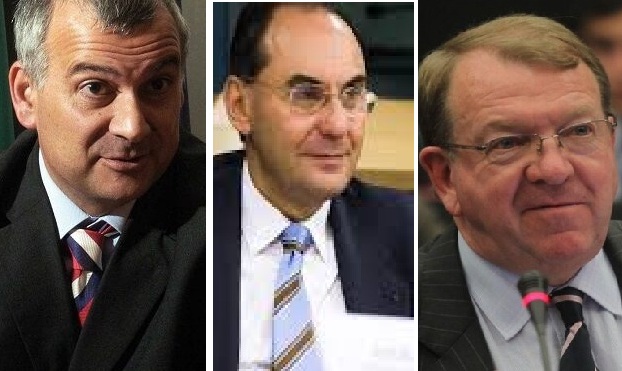
The letter, signed by Alejo Vidal-Quadras, ISJ President and former Vice-President of the European Parliament; Struan Stevenson, Chair of the ISJ Committee on the Protection of Political Freedoms in Iran; and Paulo Casaca, former MEP, described the move as “an assault on memory, truth, and justice, one that victims’ families, and indeed the international community, expect you to condemn in the strongest terms.”
According to Tehran’s Deputy Mayor, the cemetery grounds will be turned into a car park with authorization from the highest levels of power. The cemetery director has admitted publicly, “we leveled the place.” ISJ leaders called this “a calculated attempt to erase evidence of mass executions that UN experts have recognized as crimes against humanity and genocide.” They also noted the chilling confession by the Deputy Mayor that Section 41 was the graveyard of “the hypocrites,” the regime’s derogatory term for PMOI members — “an admission that underscores its intent to obliterate not only the bodies but also the legacy of those who resisted its tyranny.”
The letter reminded the UN leaders that, in countries where mass atrocities have taken place, preserving burial sites is essential for truth-telling, healing, and accountability. “The United Nations has adopted resolutions affirming the right to truth and the importance of forensic investigations of mass graves. Yet in Iran, these principles are being trampled with impunity. Regrettably, there has been no reaction thus far from the UN to this heinous crime,” the signatories wrote.
The ISJ leaders also drew attention to ongoing executions and political persecution: two PMOI members were recently executed on charges of Moharebeh and membership in the organization, while at least 14 others remain on death row for the same alleged offense. The letter emphasized: “Their only ‘crime’ is their association with a movement that dares to envision a democratic Iran.”
The plight of Maryam Akbari Monfared, a mother of three daughters imprisoned for 15 years without furlough, was highlighted as a symbol of this repression. Her “crime” was demanding accountability for the execution of her three brothers and one sister, two of whom were victims of the 1988 massacre. “Her case epitomizes the regime’s policy of punishing not only political activists but also those who demand truth and justice for their murdered loved ones,” the letter stated.
The signatories warned that silence in the face of such abuses is not neutral:
“Silence in the face of such crimes is not neutral. It is interpreted by both the regime and the victims as complicity and impunity. When human rights defenders fail to speak out against such blatant injustices, they inadvertently signal that the lives and liberties of PMOI activists and their families are expendable. Such selectivity undermines the very principles of universality and impartiality upon which the human rights framework is built.”
The ISJ urged the High Commissioner and Special Rapporteur to:
1. Condemn the desecration of Section 41 of Behesht-e Zahra Cemetery and initiate an independent investigation into mass graves and past atrocities, in line with UN resolutions and international law.
2. Publicly denounce the death sentences and persecution of political prisoners, including PMOI members and their families.
3. Demand accountability for the destruction of Section 41 and other burial sites across Iran.
4. Affirm the rights of all Iranians, regardless of political affiliation, to freedom of expression, association, and belief.
“The Iranian regime must not be allowed to rewrite history with bulldozers and silence,” the letter concluded. “The memory of the 9,500 martyrs of Section 41 must be preserved, not erased. Their sacrifice must be honored, not buried under asphalt. The time for moral clarity is now. The time for action is now.”