
• About Us
  • Contact Us
No Result
View All Result
Friday, April 10, 2026
ISJ
  • Home
  • Editorial
  • Development
  • Press Release
    • General
    • Human Rights
    • Iran and Middle East
    • Nuclear
    • Terrorism
  • Media Coverage
  • Open letters
  • Resources
    • Multimedia
    • Publications
ISJ
No Result
View All Result
Home Speeches Calls for justice for the victims of Iran’s 1988 massacre

Geoffrey R. Robertson, QC, Human Rights Barrister, addressed the August 27th conference

02/09/2021
in Calls for justice for the victims of Iran’s 1988 massacre
Geoffrey-Robertson-Iran-1988-Massacre

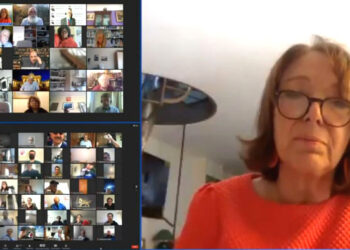
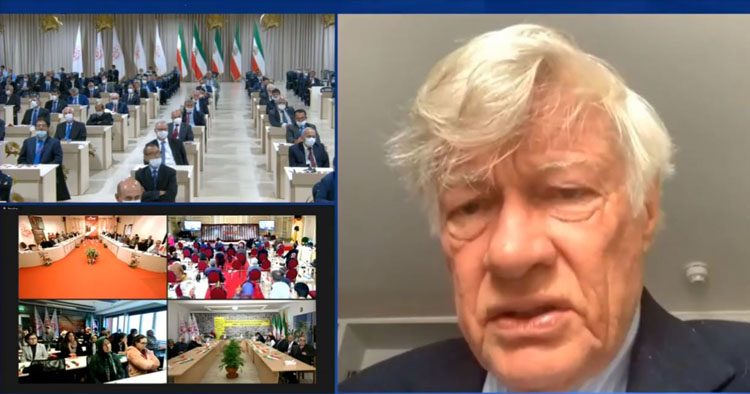
Geoffrey Robertson addressing the conference : Iran-1988-Massacre - No to impunity, yes to accountability

Share on FacebookShare on TwitterShare on RedditShare on Linkedin

Geoffrey R. Robertson, QC, Human Rights Barrister, Academic, Author, and Broadcaster, addressed the August 27th international conference “Iran: 1988 Massacre and Genocide – No to impunity, yes to accountability”

What happened in Iranian prison, in that dreadful time in late July and August of 1988. I did an investigation to the Boroumand Foundation some years ago. I interviewed about 50 survivors of those prisoners that time, and I set out my conclusions, firstly as to the facts that thousands of members of the MEK were called before a death committee and once they affirmed their allegiance, they were without any trial, without any defense lawyers, without anything, they were sent by the dead committed to a corridor on the left so called court and they were taken and hanged.

The death committee knew; all members including Raisi knew what was happening; they knew they were sending thousands of prisoners to death.  And of course, they were implementing, deliberately knowingly a fatwa issued by the Supreme Leader. Now, what was their knowledge, they knew exactly what was happening in that corridor where they directed these poor prisoners, but the question arises because it is important, this was barbaric, it was the ultimate in brutality.

But what was it in law? Because what it was in law makes a difference.  It was a crime; it has been a crime for centuries to kill prisoners without trial, to kill those who have been surrendered or have been in your custody. But the difference is that if it amounts to one particular crime, the crime of genocide, then there is an international convention, which binds the countries of the world, including the United States, it was ratified by president Reagan, to take action.

Now, to punish that genocide, what is it genocide? it is certainly a number of other offensives; it’s murder; it’s persecution; it is various offences under international law, that created the international criminal court. But to punish those offences you need to go through a lot of books, you need to get a resolution from the Security Council to send the case to the international criminal court, and Russia or China or will aproned to beat it. So, it’s important to see, to analyze whether what happened to those thousands of MEK before was properly and lawfully classed as genocide. Now in order be genuine to amount to genocide it has to be the killing of a group on the basis of their race and religion, not on the basis of their politics. We can call that politicize like that it in genocide, because genocide is confined. Stalin killed 3 million gulags, but he wasn’t guilty of genocide because he didn’t kill them to their race or religion. So it is an artificial difference you may think, but there are two reasons for it.

Firstly, the practical reason that the race and religion are the two factors that most usually they make hatred, hatred between neighbors, hatred between different classes of people; they’re particularly volatile, and also race is something you can’t help, religion very often is something you can’t help, so that you can’t change.  So, these are the two factors that we have to see whether race hatred or religious hatred was the purpose of killing this group of MEK prisoners. Well, we have to go back to the fatwa itself to see what the purpose was, and the fatwa issued by Khomeini began this way: “Since the treacherous MEK do not believe in Islam and whatever they say stands from hypocrisy, they have become renegades and since they wage war on God.”

So, this is the reason, the principal reason: waging war on God, Mohareb, this is the reason. It goes on, and suggests that for political reasons as well, but MEK ever since its foundation, was distinguished from Khomeini’s group, because of their more fundamentalist view of Islam, and of course the MEK was more liberal, and it’s quite clear as I read this fatwa in translation that it was a religious reason, was the primary reason why these people were killed and Khomeini went on, and this was direction that Raisi, of his own will, deliberately was following: “It is naive to show Mercy to Moharebs, those who wage war on God. The decisiveness of Islam before the enemies of God is among the unquestionable tenets of the Islamic regime.” So here is a bureaucracy imposing the death penalty and goes on, “kill them with revolutionary rage and rancor these enemies of Islam; you must be most ferocious against infidels.”

So I don’t think there is any doubt that the order from the supreme leader, accepted willingly by Raisi; he didn’t have to. Ayatollah Montazeri begged him to stop, but he and the other members of the death committee continued and of their own will to carry on, and ordered to kill on with rage and further on for basically, the reason of religion, because the religion of the MEK held to was different to that, which the theocratic state insisted upon.

And I think it is interesting that when the use of these killings first came up to the United Nations, there was an attempt by the regime to defend them and it was an attempt by the then chief justice Ardebili, and he explained to the UN, he said we are not a secular state, so blasphemy is not permitted. So, he said this was a form of punishing blasphemy and that of course is the crime of the religion or having the wrong religion. So, it seems to me that there is very strong evidence that this is genocide, and the genocide convention was ratified by Iran in 1956. And under the last Democratic regime, what was overthrown by CIA and MI6, but it applies to killing or causing serious mental or physical harm to members of a racial or religious group as such. Now, it wasn’t for being members of a racial group, they were all Iranian; it was for being the members of a religious group as such, religious group that did not accept the fundamentalism of the Ayatollah and the theocracy of this theocratic state, and it viewed as the most heinous of international crimes; it is mass murder by fellow humans, something that they can’t control or bumping of their conscious. The religious group that the Iranian regime intended to destroy were those who held a different view of Islam. And latter of course in September they moved on and killed those who were atheists or communists or left wingers of some form, others in other words who had denounced Khomeini’s view of Islam.

And of course, there is decisions of the courts, that if you are atheist that amounts to killing on grounds of religion even though they have non if that’s the reason. So there is no doubt, it seems to me that there is a case for prosecuting Raisi and the others even current Supreme leader who was president at the time on genocide and that is crime which engages International responsibility and something must be done about it as it was being done by the perpetrators of Srebrenica, was the last declared genocide in International law.

So that is the, I think, arguably the accurate description of what went on if you look at the actual evidence and decide to classify this is genocide and then you have an International Convention, which requires states of the world that have signed up to it, and most states have, to take action against those who perpetrated it, and one of them is the president of Iran.
Tags: Iran 1988 Massacre
ShareTweetShareShare
Previous Post

Giulio Maria Terzi, Foreign Minister of Italy (2011-2013), addressed the August 27th conference

Next Post

Eric David, Professor of International Humanitarian Law, addressed the August 27th conference

Related Posts

Theo Van Boven-Iran- 1988 Massacre
Calls for justice for the victims of Iran’s 1988 massacre

Theo Van Boven, former Director of the UN Division of Human Rights, adressed the August 27th conference

31/08/2021
Gulnara Shahinian - Iran 1988 Massacre
Calls for justice for the victims of Iran’s 1988 massacre

Gulnara Shahinian, former UN Special Rapporteur, adressed the August 27th conference

31/08/2021
Dominique Attias - Iran 1988 Massacre
Calls for justice for the victims of Iran’s 1988 massacre

Dominique Attias, Chair of the European Bars Federation, addressed the August 27th conference

31/08/2021
John Baird - Iran 1988 Massacre
Calls for justice for the victims of Iran’s 1988 massacre

John Baird, Canadian Foreign Minister (2011-2015) addressed the August 27th conference

31/08/2021
Audronius Ažubalis - Iran 1988 Massacre
Calls for justice for the victims of Iran’s 1988 massacre

Audronius Ažubalis, Minister of Foreign Affairs of Lithuania (2010 – 2012) addressed the August 27th conference

30/08/2021
Franco Frattini Iran 1988 Massacre
Calls for justice for the victims of Iran’s 1988 massacre

Franco Frattini, Foreign Minister of Italy (2002–2004 & 2008–2011) addressed the August 27th conference

31/08/2021
Next Post
Geoffrey Robertson addressing the conference: Iran 1988 Massacre

Eric David, Professor of International Humanitarian Law, addressed the August 27th conference

RECOMMENDED NEWS

Franco Frattini, Minister of Foreign Affairs of Italy, European Commissioner for Justice, Freedom and Security addressed the Free Iran World Summit

Franco Frattini, Minister of Foreign Affairs of Italy, European Commissioner for Justice, Freedom and Security addressed the Free Iran World Summit

5 years ago
In Iran, climate change is becoming a matter of life and death

In Iran, climate change is becoming a matter of life and death

3 years ago
Iranian dissidents hold major rally in France calling for regime change in Tehran

Iranian dissidents hold major rally in France calling for regime change in Tehran

3 years ago
Iran, letter to Draghi and Di Maio: “Italy will join Slovenia”

Iran, letter to Draghi and Di Maio: “Italy will join Slovenia”

5 years ago

FOLLOW US

BROWSE BY CATEGORIES

  • Calls for justice for the victims of Iran’s 1988 massacre
  • Development
  • Editorial
  • Free Iran World Summit 2021
  • Free Iran World Summit 2023
  • General
  • Human Rights
  • In the Media
  • Iran and Middle East
  • Media Coverage
  • Multimedia
  • Open letters
  • Press Release
  • Publications
  • Resources
  • Speeches
  • Support for a Free Iran 2022
  • Terrorism
  • The Committee
  • Uncategorized

BROWSE BY TOPICS

Alejo Vidal Quadras Amnesty International Ashraf-3 Ashraf 3 COVID-19 cyberattacks Ebrahim Raisi EU Policy Fligth 752 FREE IRAN 2022 Free Iran Summit FREE IRAN WORLD SUMMIT 2021 Free Iran World Summit 2023 Giulio Terzi of Sant'Agata Hamid Nouri Human Rights Iran Iran 1988 Massacre Iran diplomat terrorist Iran election Iran Protests Iran Revolution Iran Uprising Iran ‌Nuclear Deal IRGC JCPOA Kazem Rajavi Mek-Iran Mike Pomoeo Nazanin Zaghari-Ratcliffe Pahlavi Paulo Casaca Resistance Struan Stevenson Terrorism Vidal-Quadras War in Afghanistan women's suppression

POPULAR NEWS

  • 3600 lawmakers in 40 countries Support Maryam Rajavi’s Ten-point Plan for a democratic republic in Iran

    3600 lawmakers in 40 countries Support Maryam Rajavi’s Ten-point Plan for a democratic republic in Iran

    0 shares
    Share 0 Tweet 0
  • Alejo Vidal Quadras The Committee President

    0 shares
    Share 0 Tweet 0
  • ALBANIA CONDEMNED FOR BRUTAL RAID ON ASHRAF-3

    0 shares
    Share 0 Tweet 0
  • Giulio Terzi, Honorary Chairman of Committee on the Protection of Human Rights & Justice in Iran

    0 shares
    Share 0 Tweet 0
  • ISJ Report-Iran Agents in Europe

    0 shares
    Share 0 Tweet 0

About Us

ISJ

International Committee In Search of Justice (ISJ) was initially formed in 2008 as an informal group of EU parliamentarians to seek justice for the Iranian democratic opposition. In 2014 it was registered as a non-profit NGO in Brussels expanding its membership beyond elected parliamentarians to former officials and other dignitaries with an interest to promote ​​human rights, freedom, democracy, peace and stability.

Follow us on social media:

Follow Us On Twitter

Recent News

Focus Iran’s Future on Democracy, Not Dynasty

12/02/2026

ISJ Honors the Legacy of Prof. Rita Süssmuth and Her Support for Iranian Democratic Resistance

03/02/2026

Appeasement Has Failed: Britain Must Finally Proscribe the IRGC and Close Iran’s Embassy

03/02/2026

Blood Is the Last Currency of Iran’s Failing Theocracy

21/01/2026

The Committee

Paulo Casaca, founder and executive director of the “South Asia Democratic Forum”
The Committee

Paulo Casaca, founder and executive director of the “South Asia Democratic Forum”

Paulo Casaca, founder and executive director of the “South Asia Democratic Forum”, is also the founder of the international co-operation ...

01/02/2022
Paulo Casaca,  former Member of the European Parliament (1999-2009)
The Committee

Paulo Casaca, former Member of the European Parliament (1999-2009)

Paulo Casaca is a former Portuguese MP and former Member of the European Parliament (1999-2009) where he chaired the delegation ...

16/11/2021
Struan Stevenson Chairman of Committee on the Protection of Political Freedoms in Iran
The Committee

Struan Stevenson Chairman of Committee on the Protection of Political Freedoms in Iran

Struan Stevenson is the Coordinator of the Campaign for Iran Change (CiC) and Chair ISJ Committee on the Protection of ...

01/02/2022
Giulio Terzi, Honorary Chairman of Committee on the Protection of Human Rights & Justice in Iran
The Committee

Giulio Terzi, Honorary Chairman of Committee on the Protection of Human Rights & Justice in Iran

Ambassador Giulio Terzi di Sant’Agata has served in the Italian Foreign Service for forty years until December 2012. He was ...

01/02/2022
Lord Maginnis of Drumglass
The Committee

Lord Maginnis of Drumglass

Lord Maginnis of Drumglass

29/05/2021
Lord Dholakia
The Committee

Lord Dholakia- OBE, Deputy Leader of Liberal Democrats in House of Lords

Lord Dholakia, OBE, Deputy Leader of Liberal Democrats in House of Lords

29/05/2021
Lord Clarke of Hampstead,
The Committee

Lord Clarke of Hampstead, CBE, Former Chairman of UK Labour Party

Lord Clarke of Hampstead, CBE, Former Chairman of UK Labour Party

29/05/2021
Lord Carlile of Berriew
The Committee

Lord Carlile of Berriew, QC​ Co – chairman of British Parliamentary Committee for Iran Freedom, former independent reviewer of UK terrorism legislations

Lord Carlile of Berriew, QC​ Co – chairman of British Parliamentary Committee for Iran Freedom, former independent reviewer of UK terrorism legislations

29/05/2021
Tunne Kelam
The Committee

Tunne Kelam, Former Member of European Parliament

Tunne Kelam Former Member of European Parliament

29/05/2021
Ryszard Czarnecki
The Committee

Ryszard Czarnecki, Former Vice President of European Parliament

Ryszard Czarnecki Former Vice President of European Parliament

29/05/2021
Gérard Deprez,
The Committee

Gérard Deprez, Former MEP, former Chair Friends of a Free Iran intergroup European Parliament

Gérard Deprez, Former MEP, former Chair Friends of a Free Iran intergroup European Parliament

29/05/2021
Antonio Razzi
The Committee

Antonio Razzi, Secretary of Italian Senate Foreign Affairs Committee

Antonio Razzi, Secretary of Italian Senate Foreign Affairs Committee

29/05/2021
Alessandro Pagano
The Committee

Alessandro Pagano, MP President of Committee of Italian Parliamentarians for a Free Iran

Alessandro Pagano, MP President of Committee of Italian Parliamentarians  for a Free Iran

29/05/2021
Senator Lucio Malan, Quaestor of Italian Senate
The Committee

Senator Lucio Malan, Quaestor of Italian Senate

Senator Lucio Malan, Quaestor of Italian Senate

29/05/2021
Colonel Wesley Martin
The Committee

Colonel Wesley Martin, Antiterrorism/Force Protection Officer of all Coalition forces in Iraq (2005-2007)

Colonel Wesley Martin Antiterrorism/Force Protection Officer of all Coalition forces in Iraq (2005-2007)

29/05/2021
Horst Teltschik
The Committee

Horst Teltschik, Chairman of the Munich Security Conference (1999-2008)

Horst Teltschik, Chairman of the Munich Security Conference (1999-2008)

29/05/2021
Raymond Tanter
The Committee

Prof. Raymond Tanter, President of Iran Policy Committee, Washington D.C.

Prof. Raymond Tanter President of Iran Policy Committee, Washington D.C.

29/05/2021
Ingrid-Betancourt
The Committee

Ingrid Betancourt

29/05/2021
General Hugh Shelton
The Committee

Gen. Hugh Shelton, Chairman of US Joint Chiefs of Staff (1997-2001)

Gen. Hugh Shelton, Chairman of US Joint Chiefs of Staff (1997-2001)

29/05/2021
  • Home
  • Media Coverage
  • Press Releases
  • Contact Us
  • About Us

© 2024 - International Committee In Search of Justice (ISJ)

No Result
View All Result
  • Home
  • About Us
  • Editorial
  • Development
  • Press Release
    • General
    • Human Rights
    • Iran and Middle East
    • Nuclear
    • Terrorism
  • Media Coverage
  • Open letters
  • Resources
    • Multimedia
    • Publications

© 2024 - International Committee In Search of Justice (ISJ)