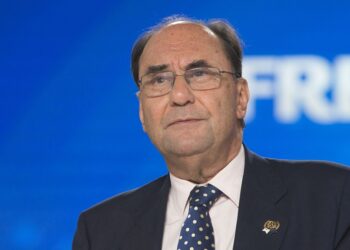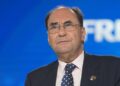
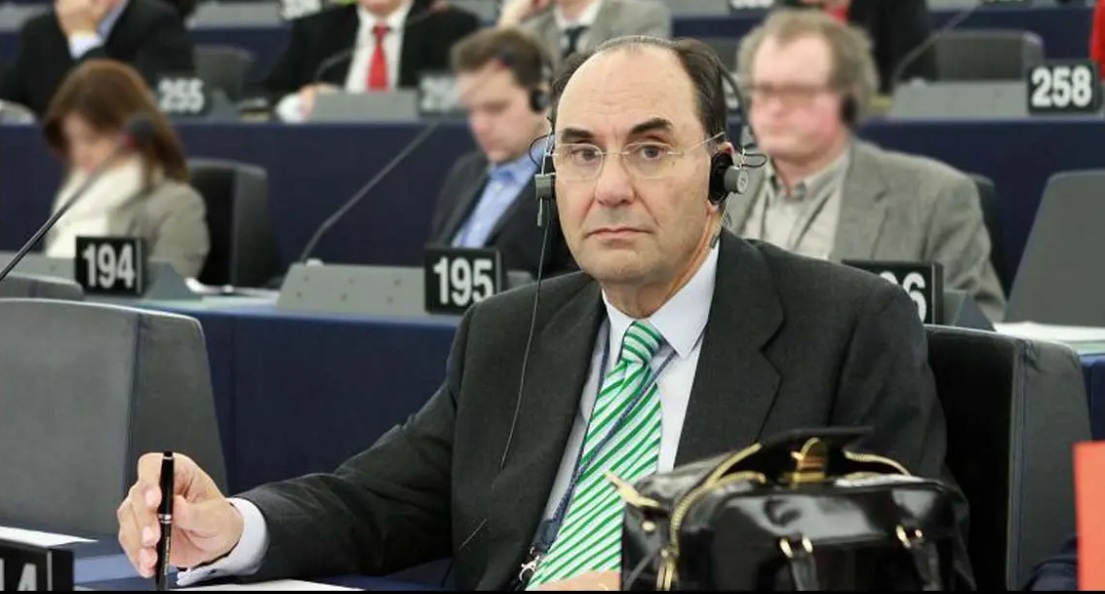
15 April 2025 – Earlier today, I had the opportunity to provide testimony before the Spanish Audiencia Nacional regarding the attempt on my life in Madrid on 9 November 2023. The investigative judge posed several direct and thoughtful questions, including one that has captured public attention: why, immediately after being shot and while being rushed to the hospital, did I state unequivocally that the Iranian regime was behind the attack?
My answer to the court was clear and unwavering: I have no doubt about the regime’s responsibility. That certainty stems from more than two decades of public and principled support for the Iranian democratic opposition, particularly the National Council of Resistance of Iran (NCRI) and the Mujahedin-e Khalq (PMOI/MEK).
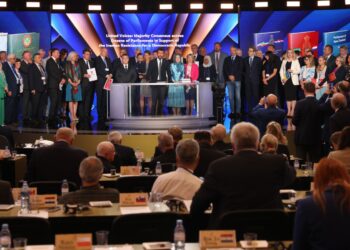
This commitment dates back to my service as Vice-President of the European Parliament, where I invited Mrs. Maryam Rajavi, the NCRI’s President-elect, to address Parliament, and worked with fellow MEPs across party lines to expose the brutality of the Iranian regime and advocate for a democratic alternative. I also traveled to Camp Ashraf in Iraq in 2008 to meet thousands of MEK members and supported their legal efforts to reverse unjust terrorist designations in both the EU and the US.
My work through the International Committee in Search of Justice (ISJ)—which I founded in 2008—has consistently sought to hold Tehran accountable for its human rights violations, nuclear deception, and global campaign of terror. The Iranian regime responded by officially blacklisting me, my organization, and our efforts. In 2022, I was publicly named as one of its top targets.
Given this long-standing track record, it is no surprise that the regime sought to silence me. While its previous plots, such as the 2018 foiled bombing of the NCRI rally in Paris, involved senior Iranian diplomats, this time Tehran sought plausible deniability by outsourcing the attack to criminal networks. Nevertheless, the pattern is unmistakable—and the intention, unmistakably political.
Let me be clear: I have only one adversary—the regime in Tehran. Its desperation to crush dissent beyond its borders only reinforces the legitimacy of the Iranian people’s desire for freedom and democracy.
Today’s hearing represents an important step toward justice—not only for me, but for all those who have been targeted by this regime. I remain proud to stand with the Iranian people, and I will continue to raise my voice until the repression ends and liberty prevails.
The following background briefing prepared by the ISJ provides further context regarding my testimony and the broader implications of this case.
ISJ Background Briefing on Hearing of Prof. Alejo Vidal-Quadras
Released following the hearing of Professor Alejo Vidal-Quadras before the Spanish investigative judge, 15 April 2025
Why Was Alejo Vidal-Quadras Targeted by the Iranian Regime?
On April 15, 2025, Prof. Alejo Vidal-Quadras, President of the International Committee in Search of Justice (ISJ), testified as a witness before Spain’s Audiencia Nacional, 18 months after surviving an assassination attempt in Madrid on 9 November 2023. This hearing, conducted by an investigative judge, marked a pivotal moment in the pursuit of accountability. It also underscored growing evidence that the attempt on his life was part of the Iranian regime’s campaign to silence international supporters of Iranian democracy.
This statement is issued by ISJ to accompany Dr. Vidal-Quadras’s public remarks to the press and provides the political and strategic background behind his targeting.
________________________________________
Dr. Vidal-Quadras’s Advocacy and ISJ’s Role
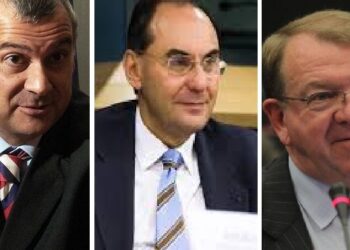
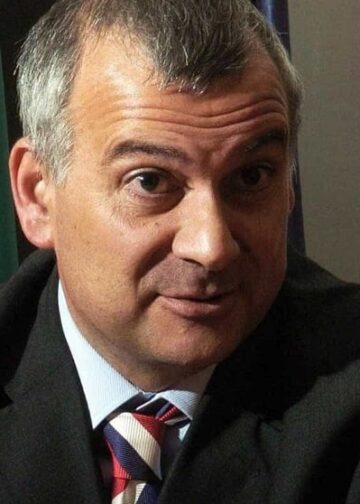
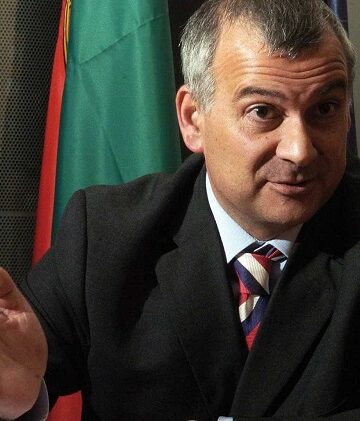
Dr. Vidal-Quadras served as Vice-President of the European Parliament (1999–2014), where he co-founded and served as Honorary President of the Friends of a Free Iran Intergroup, alongside MEPs Paulo Casaca (Socialist, Portugal) and Struan Stevenson (Conservative, United Kingdom). Through their advocacy, the European Parliament adopted several resolutions condemning Tehran’s abuses and calling for an end to the policy of appeasement.
In 2008, Prof. Vidal-Quadras launched ISJ, transforming it from an informal initiative into a Brussels-based NGO with a network of more than 4,000 cross-party parliamentarians from Europe and North America. ISJ supports the National Council of Resistance of Iran (NCRI) and has played a central role in exposing Iran’s human rights abuses, sponsorship of terrorism, and covert nuclear activities.
As a former nuclear physics professor, Dr. Vidal-Quadras has authored detailed policy papers and addressed international conferences on Iran’s nuclear programme, warning of the regime’s efforts to achieve weapons-grade capabilities. ISJ’s latest Whitepaper, “Europe’s Failed Policy Toward Iran,” was published in September 2024 and rolled out in a Press conference in Brussels. His engagement has reached millions of Iranians inside and outside the country and made him a central figure in international efforts to support a secular, democratic Iran.
Iran’s Campaign Against Dr. Vidal-Quadras
The Iranian regime’s efforts to discredit, intimidate, and silence Dr. Vidal-Quadras are not new. In October 2022, Tehran issued a blacklist naming him as its top target, alongside other Members of the European Parliament and ISJ itself. In response, European Parliament President Roberta Metsola suspended all formal EU engagement with Iran.
On 3 November 2023, six days before the assassination attempt, the Iranian regime’s HispanTV accused Dr. Vidal-Quadras of supporting “Zionist colonial occupation” and promoting “racism and genocide”—rhetoric historically used to incite violence against critics.
Hours after Dr. Vidal-Quadras was shot in Madrid on 9 November, Iran’s embassy in Madrid issued a vague statement condemning “terrorism” without even naming Vidal-Quadras and instead blaming Iranian opposition. The next day, Mashregh News, affiliated with the Islamic Revolutionary Guard Corps (IRGC), published a fabricated report suggesting that Vidal-Quadras had been eliminated by the Iranian opposition over internal disputes.
These actions reflect the regime’s broader campaign of disinformation, deflection, and state-sponsored violence targeting critics abroad.
The Investigation and Its Broader Implications
The case is being led by Spain’s Audiencia Nacional, in coordination with law enforcement agencies in France, Italy, and the Netherlands. A key suspect arrested in the Netherlands is believed to be connected to an Iranian-directed criminal network.
Court material have documented how Tehran increasingly relies on criminal organized crime gangs to execute operations abroad, a tactic designed to obscure official involvement and avoid direct diplomatic consequences. As media have reported, Iran employs a hybrid terror strategy: outsourcing plots to criminal gangs while feeding media disinformation.
This method is not limited to the Vidal-Quadras case. A detailed CNN investigation has shown how Iran has used Swedish-based criminal networks, including teenage gang members, to conduct proxy attacks against perceived Israeli targets, further confirming the regime’s pattern of outsourcing terror to organised crime groups to achieve plausible deniability.
Dr. Vidal-Quadras has consistently linked the attack to his public support for the NCRI, a conclusion increasingly supported by the judicial probe. The IRGC, the regime’s principal vehicle for both internal repression and overseas terror, has been implicated in similar plots across Europe, including the 2018 foiled bombing of an NCRI rally near Paris, for which an Iranian diplomat was convicted and sentenced to 20 years in prison.
The European Parliament has repeatedly called for the IRGC to be designated as a terrorist entity. In its most recent resolution adopted on 3 April 2025, Parliament reiterated its demand for the Islamic Revolutionary Guard Corps (IRGC) to be added to the EU’s terrorist list, emphasizing its central role in both internal repression and extraterritorial attacks.
ISJ’s Response and Dr. Vidal-Quadras’s Message
The attempt to silence Dr. Vidal-Quadras is emblematic of the Iranian regime’s strategy of transnational repression. Through assassination plots, cyber operations, and disinformation, Tehran has increasingly targeted activists, journalists, and policymakers who support the Iranian opposition.
The ISJ calls on European governments to dismantle Iran’s terror infrastructure on the continent and to resist hostage diplomacy and appeasement policies that embolden further aggression.
For Dr. Vidal-Quadras, the regime’s hostility has only deepened his conviction:
“If being targeted by this regime is the price of defending human dignity and democracy, then I wear it as a badge of honor.”
He remains proud to stand with the Iranian people and the democratic resistance working for a free, secular republic. The ISJ reaffirms its full commitment to this cause, and to ensuring that justice—not fear—prevails.
This background briefing is intended to inform media, analysts, and the public as Dr. Vidal-Quadras shares his reflections following his testimony. It also underscores why the Iranian regime fears his voice—and why silencing it has failed.