
• About Us
  • Contact Us
No Result
View All Result
Monday, April 27, 2026
ISJ
  • Home
  • Editorial
  • Development
  • Press Release
    • General
    • Human Rights
    • Iran and Middle East
    • Nuclear
    • Terrorism
  • Media Coverage
  • Open letters
  • Resources
    • Multimedia
    • Publications
ISJ
No Result
View All Result
Home Free Iran World Summit 2021 In the Media

The Silent Erasure: The Iranian Regime’s Assault on Memory and Justice

By Struan Stevenson

12/11/2025
in In the Media, Media Coverage
Share on FacebookShare on TwitterShare on RedditShare on Linkedin

In the shadowy corridors of power in Tehran, a sinister campaign is unfolding, one that not only seeks to silence dissent but aims to obliterate the very memory of those who dared to challenge the oppressive regime.

The Iranian authorities have escalated their systematic efforts to erase evidence of past atrocities by demolishing Section 41 of Behesht-e Zahra Cemetery in Tehran, the grave site long identified as the final resting place of thousands of executed political prisoners from the 1980s. Reports now confirm that heavy machinery was deployed on August 11 this year, that trees were cut down, vegetation burned, and that the area was sealed off under armed guard. One week later, on August 19, the Deputy Mayor of Tehran, Davoud Goodarzi, admitted that the location had been converted into a parking lot, with formal “permission” from officials.

For decades, the main democratic opposition organisation, Mujahedin-e Khalq (MEK), has stood as a symbol of resistance against tyranny, representing the hopes and aspirations of countless Iranians yearning for freedom and democracy. In the 1980s, the regime unleashed a brutal campaign of executions against political opponents, and Section 41 of Behesht-e Zahra became a sombre testament to those lost lives. Each grave in that section once told a story, narratives of courage, sacrifice, and the unyielding pursuit of justice. By destroying this sacred ground, the Iranian regime is not merely attempting to erase history; it is sending a clear message that dissent will not be tolerated and that the truth will be buried alongside the victims.

In a country where serious human-rights violations have occurred, mass or collective graves serve more than a burial site; they offer invaluable insights into the nature and scale of those crimes and provide a vehicle for truth and closure for victims’ families. When such sites are unprotected, ignored, or obstructed, the opportunity for societal healing and justice remains elusive. The recent documentation shows that Section 41 is estimated to have contained between 5,000 and 7,000, possibly up to 9,500, graves.

On August 19, Deputy Mayor Goodarzi brazenly admitted that the site has been repurposed into a car park: “Section 41 was just left like that… we needed a parking lot… we got permission and did it.” Such authorization can only have come from the highest authorities. Some reports attribute direct orders to the Supreme Leader Ayatollah Ali Khamenei. Goodarzi also referred contemptuously to those buried there using the regime’s pejorative label for the MEK: “the hypocrites.” This act of obliteration is not only a violation of the dignity due to the deceased but also an affront to humanity itself. The international community has a moral obligation to respond swiftly and decisively.
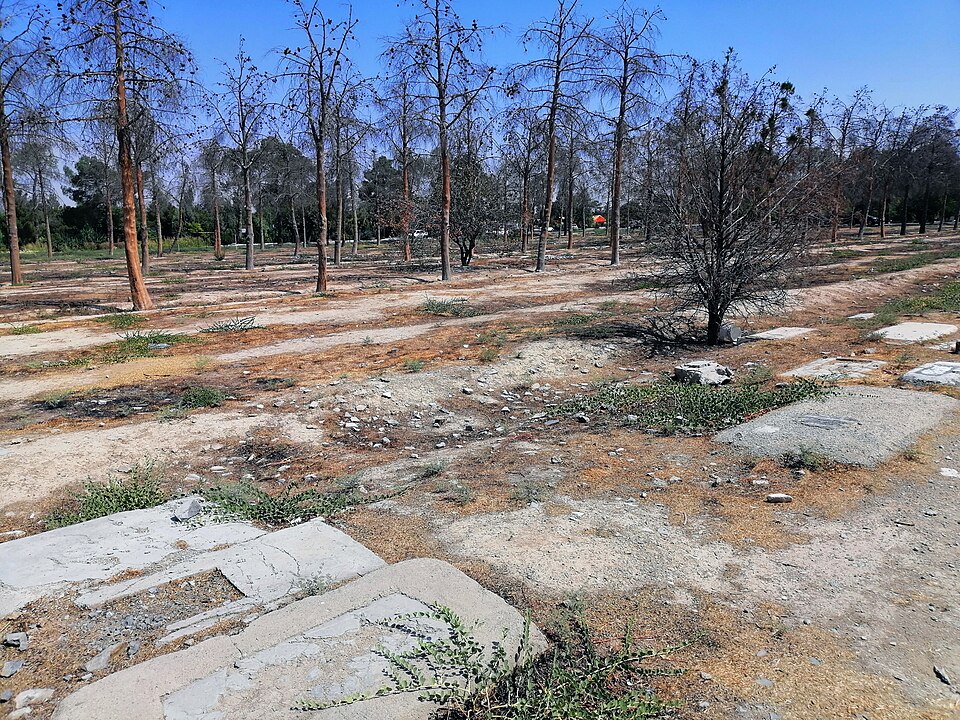
Behesht-e Zahra Cemetery in Tehran

On September 29, the United Nations sent a strongly worded letter to the Iranian government, signed by no fewer than five special rapporteurs encompassing the field of Human Rights. The letter expressed severe concern over “the destruction and desecration of the mass grave site in Section 41 of Behesht-e Zahra Cemetery in Tehran.” The letter concluded: “By destroying the site, the authorities would not only eliminate physical traces of political executions but also obstruct mourning of the family, block efforts aimed at truth and accountability and suppress public memory.” The U.N. special rapporteurs ended the letter by stating: “While awaiting a reply, we urge that all necessary interim measures be taken to halt the alleged violations and prevent their re-occurrence and in the event that the investigations support or suggest the allegations to be correct, to ensure the accountability of any person(s) responsible for the alleged violations.”

The U.N. knows that this is far from an isolated incident. Over decades, the regime has systematically desecrated or destroyed burial sites of victims from the 1980s across Iran, from Khavaran, Mashhad, Ahvaz, to Tabriz, in a concerted effort to obliterate historical evidence. In his 2024 report, the former U.N. Special Rapporteur on human rights in Iran, Professor Javaid Rehman, described the 1981 and 1988 massacres of political prisoners as constituting genocide and crimes against humanity, and he urged states to invoke universal jurisdiction to hold the perpetrators accountable.

The U.N. has adopted key resolutions concerning the investigation of mass graves. These reflect a global consensus that such crimes must be properly investigated and perpetrators brought to justice. Moreover, the U.N. should support Iranian activists and human-rights organizations who are relentlessly documenting the regime’s atrocities. Truth-seeking must not be optional. It must be assured to honor the victims and to empower the living in their quest for justice and accountability. The memory of those buried in Section 41 must not disappear. It must serve as a rallying cry for all who believe in the fundamental rights of individuals to speak freely and live without fear.

As we witness this assault on memory and justice, let us also remember that the struggle for human rights in Iran is far from over. The Iranian people and their brave Resistance Units affiliated with the MEK remain resilient, and their quest for freedom endures. It is our duty to stand in solidarity with them, to amplify their voices, and to ensure that history remembers the sacrifices made in the name of liberty. Let us not be silent in the face of tyranny. The flattening and repurposing of Section 41 demands our outrage, our action, and our unwavering commitment to the principles of justice and human rights. The U.N. and the global community must now press ahead with demands for full accountability from the Iranian regime.

Original article available at: Townhall

This article, written by Mr. Struan Stevenson, was originally published on Townhall and is reposted here for your reference

The Silent Erasure: The Iranian Regime’s Assault on Memory and Justice

Tags: Iran 1988 Massacre
ShareTweetShareShare
Previous Post

Second Anniversary of the Assassination Attempt on Professor Alejo Vidal-Quadras

Next Post

What is Reza Pahlavi’s Endgame?

Related Posts

Media Coverage

Focus Iran’s Future on Democracy, Not Dynasty

12/02/2026
Media Coverage

Appeasement Has Failed: Britain Must Finally Proscribe the IRGC and Close Iran’s Embassy

03/02/2026
Media Coverage

Blood Is the Last Currency of Iran’s Failing Theocracy

21/01/2026
Media Coverage

Iran Does Not Need a Crown — It Needs a Republic

13/01/2026
Media Coverage

Neither Shah Nor Supreme Leader: Can Iran’s Theocracy Survive a Nation in Revolt?

04/01/2026
Media Coverage

Ypres, Human Rights Day, and Iran’s Martyrs: Why Memory Is a Moral Duty

15/12/2025
Next Post

What is Reza Pahlavi’s Endgame?

RECOMMENDED NEWS

ISJ Slam Sham Show-Trial in Iran

ISJ Slam Sham Show-Trial in Iran

5 years ago
Dominique Attias - Iran 1988 Massacre

Dominique Attias, Chair of the European Bars Federation, addressed the August 27th conference

5 years ago
-Iranian President Ebrahim Raisi met Russian President Vladimir Putin and Turkish President Recep Tayyip Erdogan in Tehran last month (Picture Sergei SavostyanovSputnikAFP via Getty Images)

Iran’s bloodsoaked president, Ebrahim Raisi, must be banned from United Nations’ General Assembly

4 years ago
Geir Haarde’s message of support to a Free Iran 2022

Geir Haarde’s message of support to a Free Iran 2022

4 years ago

FOLLOW US

BROWSE BY CATEGORIES

  • Calls for justice for the victims of Iran’s 1988 massacre
  • Development
  • Editorial
  • Free Iran World Summit 2021
  • Free Iran World Summit 2023
  • General
  • Human Rights
  • In the Media
  • Iran and Middle East
  • Media Coverage
  • Multimedia
  • Open letters
  • Press Release
  • Publications
  • Resources
  • Speeches
  • Support for a Free Iran 2022
  • Terrorism
  • The Committee
  • Uncategorized

BROWSE BY TOPICS

Alejo Vidal Quadras Amnesty International Ashraf-3 Ashraf 3 COVID-19 cyberattacks Ebrahim Raisi EU Policy Fligth 752 FREE IRAN 2022 Free Iran Summit FREE IRAN WORLD SUMMIT 2021 Free Iran World Summit 2023 Giulio Terzi of Sant'Agata Hamid Nouri Human Rights Iran Iran 1988 Massacre Iran diplomat terrorist Iran election Iran Protests Iran Revolution Iran Uprising Iran ‌Nuclear Deal IRGC JCPOA Kazem Rajavi Mek-Iran Mike Pomoeo Nazanin Zaghari-Ratcliffe Pahlavi Paulo Casaca Resistance Struan Stevenson Terrorism Vidal-Quadras War in Afghanistan women's suppression

POPULAR NEWS

  • 3600 lawmakers in 40 countries Support Maryam Rajavi’s Ten-point Plan for a democratic republic in Iran

    3600 lawmakers in 40 countries Support Maryam Rajavi’s Ten-point Plan for a democratic republic in Iran

    0 shares
    Share 0 Tweet 0
  • Alejo Vidal Quadras The Committee President

    0 shares
    Share 0 Tweet 0
  • ALBANIA CONDEMNED FOR BRUTAL RAID ON ASHRAF-3

    0 shares
    Share 0 Tweet 0
  • Giulio Terzi, Honorary Chairman of Committee on the Protection of Human Rights & Justice in Iran

    0 shares
    Share 0 Tweet 0
  • ISJ Report-Iran Agents in Europe

    0 shares
    Share 0 Tweet 0

About Us

ISJ

International Committee In Search of Justice (ISJ) was initially formed in 2008 as an informal group of EU parliamentarians to seek justice for the Iranian democratic opposition. In 2014 it was registered as a non-profit NGO in Brussels expanding its membership beyond elected parliamentarians to former officials and other dignitaries with an interest to promote ​​human rights, freedom, democracy, peace and stability.

Follow us on social media:

Follow Us On Twitter

Recent News

Focus Iran’s Future on Democracy, Not Dynasty

12/02/2026

ISJ Honors the Legacy of Prof. Rita Süssmuth and Her Support for Iranian Democratic Resistance

03/02/2026

Appeasement Has Failed: Britain Must Finally Proscribe the IRGC and Close Iran’s Embassy

03/02/2026

Blood Is the Last Currency of Iran’s Failing Theocracy

21/01/2026

The Committee

Paulo Casaca, founder and executive director of the “South Asia Democratic Forum”
The Committee

Paulo Casaca, founder and executive director of the “South Asia Democratic Forum”

Paulo Casaca, founder and executive director of the “South Asia Democratic Forum”, is also the founder of the international co-operation ...

01/02/2022
Paulo Casaca,  former Member of the European Parliament (1999-2009)
The Committee

Paulo Casaca, former Member of the European Parliament (1999-2009)

Paulo Casaca is a former Portuguese MP and former Member of the European Parliament (1999-2009) where he chaired the delegation ...

16/11/2021
Struan Stevenson Chairman of Committee on the Protection of Political Freedoms in Iran
The Committee

Struan Stevenson Chairman of Committee on the Protection of Political Freedoms in Iran

Struan Stevenson is the Coordinator of the Campaign for Iran Change (CiC) and Chair ISJ Committee on the Protection of ...

01/02/2022
Giulio Terzi, Honorary Chairman of Committee on the Protection of Human Rights & Justice in Iran
The Committee

Giulio Terzi, Honorary Chairman of Committee on the Protection of Human Rights & Justice in Iran

Ambassador Giulio Terzi di Sant’Agata has served in the Italian Foreign Service for forty years until December 2012. He was ...

01/02/2022
Lord Maginnis of Drumglass
The Committee

Lord Maginnis of Drumglass

Lord Maginnis of Drumglass

29/05/2021
Lord Dholakia
The Committee

Lord Dholakia- OBE, Deputy Leader of Liberal Democrats in House of Lords

Lord Dholakia, OBE, Deputy Leader of Liberal Democrats in House of Lords

29/05/2021
Lord Clarke of Hampstead,
The Committee

Lord Clarke of Hampstead, CBE, Former Chairman of UK Labour Party

Lord Clarke of Hampstead, CBE, Former Chairman of UK Labour Party

29/05/2021
Lord Carlile of Berriew
The Committee

Lord Carlile of Berriew, QC​ Co – chairman of British Parliamentary Committee for Iran Freedom, former independent reviewer of UK terrorism legislations

Lord Carlile of Berriew, QC​ Co – chairman of British Parliamentary Committee for Iran Freedom, former independent reviewer of UK terrorism legislations

29/05/2021
Tunne Kelam
The Committee

Tunne Kelam, Former Member of European Parliament

Tunne Kelam Former Member of European Parliament

29/05/2021
Ryszard Czarnecki
The Committee

Ryszard Czarnecki, Former Vice President of European Parliament

Ryszard Czarnecki Former Vice President of European Parliament

29/05/2021
Gérard Deprez,
The Committee

Gérard Deprez, Former MEP, former Chair Friends of a Free Iran intergroup European Parliament

Gérard Deprez, Former MEP, former Chair Friends of a Free Iran intergroup European Parliament

29/05/2021
Antonio Razzi
The Committee

Antonio Razzi, Secretary of Italian Senate Foreign Affairs Committee

Antonio Razzi, Secretary of Italian Senate Foreign Affairs Committee

29/05/2021
Alessandro Pagano
The Committee

Alessandro Pagano, MP President of Committee of Italian Parliamentarians for a Free Iran

Alessandro Pagano, MP President of Committee of Italian Parliamentarians  for a Free Iran

29/05/2021
Senator Lucio Malan, Quaestor of Italian Senate
The Committee

Senator Lucio Malan, Quaestor of Italian Senate

Senator Lucio Malan, Quaestor of Italian Senate

29/05/2021
Colonel Wesley Martin
The Committee

Colonel Wesley Martin, Antiterrorism/Force Protection Officer of all Coalition forces in Iraq (2005-2007)

Colonel Wesley Martin Antiterrorism/Force Protection Officer of all Coalition forces in Iraq (2005-2007)

29/05/2021
Horst Teltschik
The Committee

Horst Teltschik, Chairman of the Munich Security Conference (1999-2008)

Horst Teltschik, Chairman of the Munich Security Conference (1999-2008)

29/05/2021
Raymond Tanter
The Committee

Prof. Raymond Tanter, President of Iran Policy Committee, Washington D.C.

Prof. Raymond Tanter President of Iran Policy Committee, Washington D.C.

29/05/2021
Ingrid-Betancourt
The Committee

Ingrid Betancourt

29/05/2021
General Hugh Shelton
The Committee

Gen. Hugh Shelton, Chairman of US Joint Chiefs of Staff (1997-2001)

Gen. Hugh Shelton, Chairman of US Joint Chiefs of Staff (1997-2001)

29/05/2021
  • Home
  • Media Coverage
  • Press Releases
  • Contact Us
  • About Us

© 2024 - International Committee In Search of Justice (ISJ)

No Result
View All Result
  • Home
  • About Us
  • Editorial
  • Development
  • Press Release
    • General
    • Human Rights
    • Iran and Middle East
    • Nuclear
    • Terrorism
  • Media Coverage
  • Open letters
  • Resources
    • Multimedia
    • Publications

© 2024 - International Committee In Search of Justice (ISJ)